Where are we when people are more upset about ones political stance or even the ministries the church are involved in than the doctrinal stance of its pastor or leaders. None of this is to say that doctrine is all there is but in the end ones beliefs drive ones action and unorthodox beliefs in the end lead to unorthodox practices.
Wednesday, August 02, 2006
Politics over Doctrine
An article in the New York Times reveals that congregants at Gregory Boyd’s church were upset when he announced that he would not preach on political stances from the pulpit. The article says some got up and left and did not come back, a fairly large number leaving permanently. Now some may say this shows people concerned for the country but what is most disturbing to me is that the people left over this issue but Boyd’s doctrinal stance on the sovereignty of God apparently does not bother them. Gregory Boyd is an open proponent of Open Theism, in such books as Is God to Blame? (see endorsers here), which denies God’s sovereignty. I am fairly sure he and others that hold to Open Theism would say they do not deny God’s sovereignty as they have redefined God’s sovereignty to fit their view but they have since the God they worship is in the end nothing but a reactionary powerless God. So I guess, by their actions, for Woodland Hills Church supporting the correct candidate or political stance is more important than proclaiming who God truly is.
Where are we when people are more upset about ones political stance or even the ministries the church are involved in than the doctrinal stance of its pastor or leaders. None of this is to say that doctrine is all there is but in the end ones beliefs drive ones action and unorthodox beliefs in the end lead to unorthodox practices.
Where are we when people are more upset about ones political stance or even the ministries the church are involved in than the doctrinal stance of its pastor or leaders. None of this is to say that doctrine is all there is but in the end ones beliefs drive ones action and unorthodox beliefs in the end lead to unorthodox practices.


Monday, July 31, 2006
Biblical Theology Sermons
For those of you interested in Biblical Theology, as I am, you can hear Michael Lawrence(Associate Pastor) at Capital Hill preach on the subject. The topics have been: Creation, Fall, Love and the most recent Sacrifice. Here is the link to them: Capital Hill Sermons.
Thursday, July 27, 2006
The Church Pt 2 - Ekklesia
Here goes and I pray this makes sense:
Ekklesia is the Greek word translated church in scripture with, I think, one exception. However the word church is probably not the best translation today based on how the word church is seen and used. In general the word church, today, speaks to an organization but in scripture it refers to a people, which may make up an organization. While the word can denote an assembly its the people that make up that assembly that are the focus not the assembly itself. Thus when we speak of the Baptist Church or the Church of England or the church building we tend to miss the point of the Greek word that is behind the English word.
This is where it is dangerous to do word studies using an English dictionary. Good hermeneutics is not to look for the English meaning but to look for the Greek authorial meaning. While they may be the same they also may not and then lead us astray. For example the word ekklesia is literally “called out ones” so again it speaks to the assembly as people and not as an organization. In common Greek usage the word did not necessarily have a spiritual usage but could simply refer to a group of people called out for a purpose so for example the city council meeting together or even the Kiwanis could be called an ekklesia. It is the context of scripture that shows what this group of people is and that it is a group of people called to a holy calling (1Tim 1:9). So we can say that when we see the word ekklesia in scripture it refers to the nature of the people and who the people are that are assembled. For purposes of this section on the church I am merely going to say that the word in and of itself does not appear to denote whether it refers to the universal/invisible or local/visible church. We will look at this later as I think the text of scripture is clear that there exists, and we are called to, local assemblies and in the big picture all those called out by God to varying local assemblies belong to the Universal church in a spiritual manner.
What is interesting about the word is that in a biblical sense any group gathered as called out saints (1 Cor 1:2) makes up the church or ekklesia. Here I am not dealing with the structure that needs to be there or not be there but instead want to focus on the “who” of the church. This would say that a church should not include unbelievers/unregenerate people. This is not to say that we can be certain of everyone’s position with God but it does appear to say much about infant baptism and church membership being offered to those that are certainly not believers. I would say that this also extends out to how we do church in that we should not be looking to the world, the unregenerate, for guidance in what church should be like. We are thus not called to tailor worship to please the lost but the saved. This does not give license to be unintelligible to people but it says that surveys of ones neighborhood or the nation to see what the church needs to be is denying who the church is.
All too often people jump into seeing what the church is to be without starting at the beginning with who the church is made up of. It is not defined by its walls or its architecture but by its people and those people are the called of God, those that are in Christ. As I try and work through what the church is to be over the next weeks and months I want to always keep in focus what the church is to start with, believers. The church is not an “it” but a “who” as it is made up of individuals called by God to worship Him. Just as in Exodus the people were called out of Egypt to worship God so too we are called to worship God which is the goal and focus of the ekklesia or biblical church.
There is probably much more to say and as I work through this I may even refine and modify things but I do think that it is imperative to see who the church is made up of so that we start on the correct footing. We are to see ourselves as the Ekklesia of God, those Called out by God and that should be the basis for how we view church and how we do church.
Ekklesia is the Greek word translated church in scripture with, I think, one exception. However the word church is probably not the best translation today based on how the word church is seen and used. In general the word church, today, speaks to an organization but in scripture it refers to a people, which may make up an organization. While the word can denote an assembly its the people that make up that assembly that are the focus not the assembly itself. Thus when we speak of the Baptist Church or the Church of England or the church building we tend to miss the point of the Greek word that is behind the English word.
This is where it is dangerous to do word studies using an English dictionary. Good hermeneutics is not to look for the English meaning but to look for the Greek authorial meaning. While they may be the same they also may not and then lead us astray. For example the word ekklesia is literally “called out ones” so again it speaks to the assembly as people and not as an organization. In common Greek usage the word did not necessarily have a spiritual usage but could simply refer to a group of people called out for a purpose so for example the city council meeting together or even the Kiwanis could be called an ekklesia. It is the context of scripture that shows what this group of people is and that it is a group of people called to a holy calling (1Tim 1:9). So we can say that when we see the word ekklesia in scripture it refers to the nature of the people and who the people are that are assembled. For purposes of this section on the church I am merely going to say that the word in and of itself does not appear to denote whether it refers to the universal/invisible or local/visible church. We will look at this later as I think the text of scripture is clear that there exists, and we are called to, local assemblies and in the big picture all those called out by God to varying local assemblies belong to the Universal church in a spiritual manner.
What is interesting about the word is that in a biblical sense any group gathered as called out saints (1 Cor 1:2) makes up the church or ekklesia. Here I am not dealing with the structure that needs to be there or not be there but instead want to focus on the “who” of the church. This would say that a church should not include unbelievers/unregenerate people. This is not to say that we can be certain of everyone’s position with God but it does appear to say much about infant baptism and church membership being offered to those that are certainly not believers. I would say that this also extends out to how we do church in that we should not be looking to the world, the unregenerate, for guidance in what church should be like. We are thus not called to tailor worship to please the lost but the saved. This does not give license to be unintelligible to people but it says that surveys of ones neighborhood or the nation to see what the church needs to be is denying who the church is.
All too often people jump into seeing what the church is to be without starting at the beginning with who the church is made up of. It is not defined by its walls or its architecture but by its people and those people are the called of God, those that are in Christ. As I try and work through what the church is to be over the next weeks and months I want to always keep in focus what the church is to start with, believers. The church is not an “it” but a “who” as it is made up of individuals called by God to worship Him. Just as in Exodus the people were called out of Egypt to worship God so too we are called to worship God which is the goal and focus of the ekklesia or biblical church.
There is probably much more to say and as I work through this I may even refine and modify things but I do think that it is imperative to see who the church is made up of so that we start on the correct footing. We are to see ourselves as the Ekklesia of God, those Called out by God and that should be the basis for how we view church and how we do church.
Sunday, July 23, 2006
The Local Church Pt1
Over the next few weeks I want to look at the local church. What is it, what does it look like, where do we get our guidance from in forming it and so on. All too often we look to what the world and unbelievers desire in church rather than God’s word. It is all too easy for many to simply say that scripture is not clear on what church is supposed to look like so we are left to figure it out ourselves. I personally find it hard to believe that if one truly believes in the God’s word as being the source of His guidance for us that God would leave out how the local church should look and function.
Now here, I am not talking about kinds of buildings and other particulars but instead what are the basics that a local church needs to have to be a church. When I read Barna’s Revolution his diagnosis was that if the church does not change to meet the desires of the so called revolutionaries it would die. Well for one the church, both universal and local will not die because we do not do as the world desires. Matt 16:18 speaks of this and while one may surmise that this verse is speaking of the universal church it is speaking of a gathering of people with a common goal, or purpose, as the word ekklesia means. So while it may speak of the universal church it can be applied to the local body of believers that make up the universal church.
All too often the local church is designed around a consumer mentality rather than a communer mentality. When we focus our ministries on needs rather than God we get ourselves in trouble. This is not to say that ministries are not important but what I am saying is that often we do not ask ourselves if what we are doing is first going to glorify God or satiate human desires. Is what we are going to do leading to more communing or more consuming? Is what we do for ministry dividing the family that God put together or as is all too often the case separating it up. I realize that often what we do is done with good intentions but good intentions are not enough if the end result is not pleasing to God.
So, again, over the next few weeks I will try and see what the local church is too look like. We do need to raise questions, look at history but in the end it is God’s word that needs to define our worship and the local church is the place believers gather to worship as a corporate group.
Now here, I am not talking about kinds of buildings and other particulars but instead what are the basics that a local church needs to have to be a church. When I read Barna’s Revolution his diagnosis was that if the church does not change to meet the desires of the so called revolutionaries it would die. Well for one the church, both universal and local will not die because we do not do as the world desires. Matt 16:18 speaks of this and while one may surmise that this verse is speaking of the universal church it is speaking of a gathering of people with a common goal, or purpose, as the word ekklesia means. So while it may speak of the universal church it can be applied to the local body of believers that make up the universal church.
All too often the local church is designed around a consumer mentality rather than a communer mentality. When we focus our ministries on needs rather than God we get ourselves in trouble. This is not to say that ministries are not important but what I am saying is that often we do not ask ourselves if what we are doing is first going to glorify God or satiate human desires. Is what we are going to do leading to more communing or more consuming? Is what we do for ministry dividing the family that God put together or as is all too often the case separating it up. I realize that often what we do is done with good intentions but good intentions are not enough if the end result is not pleasing to God.
So, again, over the next few weeks I will try and see what the local church is too look like. We do need to raise questions, look at history but in the end it is God’s word that needs to define our worship and the local church is the place believers gather to worship as a corporate group.
Friday, July 21, 2006
The Reading of Owen Begins
Check out over at For His Glory-Books as we start to go through Of the Mortification of Sin by Owen. After reading this book I definitely think this one that needs to be read by everyone today. Not only to do too many people ignore sin even those that know it exists fail to deal with it properly. Once you get by the way Owen, and for that matter other Puritans, write this book is very practical. While you can get the original online the abridged version by Banner of Truth is easier to read.
Join us and see what mortification really involves.
Join us and see what mortification really involves.
Saturday, July 15, 2006
The Cross of Christ
I was reading Steve Camps blog. Camp on This, and he had a great article that was written by J.C. Ryle. Ryle (1816 – 1900) is one of the authors that is much easier to read than my favorite Puritans but speaks plainly and clearly on important subjects relating to the Christian life. You can read other writings of Ryle here.
In this paper, The Cross of Christ, Ryle speaks to what for many appears to be given mainly lip service. That is, what is important about the cross of Christ. There is a quote from Charnock that says much about the importance of the cross, especially in a day that seeks to see being a Christian revolving solely around attempting to live as Jesus did:
"If our faith stops in Christ's life, and does not fasten upon His blood, it will not be justifying faith. His miracles, which prepared the world for His doctrines; His holiness, which fitted Himself for His sufferings, had been insufficient for us without the addition of the cross." Charnock. 1684
It is not enough to simply say that all that matters is that I need to study more of Christ’s life and live as such. We need to base all of what we do around an understanding of the cross which allows us to even come before God. By ignoring the true meaning of the cross we ignore that the cross was not simply a second thought or plan of God but was planned and determined from all eternity (Acts 2:23) by God.
As I, and others over at my other blog, For His Glory-Books, read through Owen’s Of the Mortification of Sin in Believers Ryle helps us to realize that to see our sin as we should we must start at the cross.
I would encourage you to read this paper by Ryle and it will help you to see why if topics such as substitutionary atonement and the cross are denied, ignored or minimized then one minimizes God since it was His plan to make the cross central. The cross, as Ryle says, is not the cause of God’s love but the effect of it. All too often I think people see it the other way round.
In this paper, The Cross of Christ, Ryle speaks to what for many appears to be given mainly lip service. That is, what is important about the cross of Christ. There is a quote from Charnock that says much about the importance of the cross, especially in a day that seeks to see being a Christian revolving solely around attempting to live as Jesus did:
"If our faith stops in Christ's life, and does not fasten upon His blood, it will not be justifying faith. His miracles, which prepared the world for His doctrines; His holiness, which fitted Himself for His sufferings, had been insufficient for us without the addition of the cross." Charnock. 1684
It is not enough to simply say that all that matters is that I need to study more of Christ’s life and live as such. We need to base all of what we do around an understanding of the cross which allows us to even come before God. By ignoring the true meaning of the cross we ignore that the cross was not simply a second thought or plan of God but was planned and determined from all eternity (Acts 2:23) by God.
As I, and others over at my other blog, For His Glory-Books, read through Owen’s Of the Mortification of Sin in Believers Ryle helps us to realize that to see our sin as we should we must start at the cross.
I would encourage you to read this paper by Ryle and it will help you to see why if topics such as substitutionary atonement and the cross are denied, ignored or minimized then one minimizes God since it was His plan to make the cross central. The cross, as Ryle says, is not the cause of God’s love but the effect of it. All too often I think people see it the other way round.
Monday, July 10, 2006
Book Store Fluff
Having been in the process of reading Owen’s Of the Mortification of Sin in Believers I am struck by how deep, and practicle, Owen goes in dealing with the issue of sin. Then this weekend I was at a shopping center and was walking through a Christina Book Store, or should I say Book & Trinket Market, and was amazed at how shallow a vast majority of the selection was. I am not just speaking of the size of words or the number of pages but in the content presented.
So much of what is offered and what is read is on the shelf to please men, and women, make people feel better about themselves or simply to better themselves. This then leaves little room for dealing with real issues such as how does sin affect our glorifying God. Now this is not to say there are no books out there but what I am saying is that the vast majority of books being sold, and sales is probably the driving force, are fluff.
Just as Paul on writing to the Corinthians in 1 Cor 3:2 speaks of the Corintheans still being on milk, all too many book stores are nothing but milk and most of it gone sour at that. I am not trying to be a book snob but we only have so much time given us by God and it needs to be spent in a much better way than reading how to feel better about ones self and never dealing with issues that deny God His rightful glory such as the pervasiveness of sin in our lives.
So much of what is offered and what is read is on the shelf to please men, and women, make people feel better about themselves or simply to better themselves. This then leaves little room for dealing with real issues such as how does sin affect our glorifying God. Now this is not to say there are no books out there but what I am saying is that the vast majority of books being sold, and sales is probably the driving force, are fluff.
Just as Paul on writing to the Corinthians in 1 Cor 3:2 speaks of the Corintheans still being on milk, all too many book stores are nothing but milk and most of it gone sour at that. I am not trying to be a book snob but we only have so much time given us by God and it needs to be spent in a much better way than reading how to feel better about ones self and never dealing with issues that deny God His rightful glory such as the pervasiveness of sin in our lives.
Thursday, July 06, 2006
Valley of Vision Music CD free song
Here is a free download of one of the songs from the Sovereign Grace Ministries new Valley of vision CD due out in August. For more info about the CD you can go here (the lyrics are also available for download on this page) and here is a link to the devotional – Valley of Vision.
Recommended reading: Richard Sibbes
I just finished reading Mark Dever’s book on Richard Sibbes. I highly recommend this book for a number of reasons. First, it gives an insight into the issues of the Puritan era and that all it entailed including the issues on non-conformity and conformity. A second issue is that the book revealed how we have to be careful how we read history, especially from this era as it can often leave one with the wrong impression. This is especially true of Sibbes as there was not much left to reveal who he was and that many that have written since have used others findings, at times in error.
Since reading the book about a man I had truthfully never heard of until I heard Mark Dever speak I have now seen that there are other Puritans to read, that in the end give a fuller understanding of the Puritan movement. So I have lined up two of Sibbes books: The Bruised Reed and Glorious Freedom (originally entitled The Excellency of the Gospel above the Law). Of The Bruised Reed Dr. D. Martin Lloyd-Jones said –
‘I shall never cease to be grateful to … Richard Sibbes who was balm to my soul at a period in my life when I was overworked and badly over tired, and therefore subject in an unusual manner to the onslaught of the devil… I found at that time that Richard Sibbes who was known in London in the early seventeenth century as “the Heavenly Doctor Sibbes” was an unfailing remedy… The bruised Reed… quietened, soothed, comforted, encouraged and healed me’ (From the back of the The Bruised Reed – Published by The banner of Truth Trust).
It may be good to read Dever’s book first as it does set the tone for the time and issues surrounding Sibbes when he wrote these books.
Since reading the book about a man I had truthfully never heard of until I heard Mark Dever speak I have now seen that there are other Puritans to read, that in the end give a fuller understanding of the Puritan movement. So I have lined up two of Sibbes books: The Bruised Reed and Glorious Freedom (originally entitled The Excellency of the Gospel above the Law). Of The Bruised Reed Dr. D. Martin Lloyd-Jones said –
‘I shall never cease to be grateful to … Richard Sibbes who was balm to my soul at a period in my life when I was overworked and badly over tired, and therefore subject in an unusual manner to the onslaught of the devil… I found at that time that Richard Sibbes who was known in London in the early seventeenth century as “the Heavenly Doctor Sibbes” was an unfailing remedy… The bruised Reed… quietened, soothed, comforted, encouraged and healed me’ (From the back of the The Bruised Reed – Published by The banner of Truth Trust).
It may be good to read Dever’s book first as it does set the tone for the time and issues surrounding Sibbes when he wrote these books.
Monday, July 03, 2006
Vibrant Worship
We are on vacation in the Carson Valley and went to Grace Community Church to worship this last Lord’s Day and the worship in both praise and word was great. One of the things it reminded me of was that all too often we put so much effort into the production of the music side of worship that it misses the mark. The worship this Sunday was almost all from the Trinity Hymnal and was accompanied by a piano and one singer. But the church attendees were enthusiastic and sang such that God was definitely praised.
I say this not to say that other music and songs cannot be used but instead it is the cooperation of the community of saints in worship that is what glorifies God. I truly like the Indelible Grace and Sovereign Grace songs and the words they use are Christ centered so their music could be used just as well. What is important is that the words glorify God and edify the congregation while the praise sung by the people reflects a heart that is truly seeking to worship and not be served.
It does seem that the area of worship music has become so consumer oriented that when songs are chosen they are chosen by what would most affect the congregation, which is often driven by the music rather than the words, and all too often how God sees them is ignored or put farther down the list. One can sing from a hymnal or a PowerPoint but in the end it is the heart and affections of the congregation towards God that matter most.
We need to approach all that we do in worship to God as being directed towards Him and not catering to us. Those of us in the congregation need to seek after Him and realize we were called to Him to worship so we need to offer up acceptable worship. The mentality that God called us due to something in us is all too often revealed in action if not in words and leads to worship that is more man centered than God centered. This is not necessarily a call to some form of worship from the past but is a call to avoid the present focus on self gratifying worship.
This does tie into the last post I made in that those referred to as revolutionaries are seeking worship that satisfies them but the goal should be worship that is acceptable to God. In the end if we are truly children of God we will encounter joy when we worship as God desires. It is not the accoutrements of the revolutionaries worship that are inherently the issue but the reason for them, satisfaction of spiritual narcissism.
Let us worship God as He and only He desires and deserves.
I say this not to say that other music and songs cannot be used but instead it is the cooperation of the community of saints in worship that is what glorifies God. I truly like the Indelible Grace and Sovereign Grace songs and the words they use are Christ centered so their music could be used just as well. What is important is that the words glorify God and edify the congregation while the praise sung by the people reflects a heart that is truly seeking to worship and not be served.
It does seem that the area of worship music has become so consumer oriented that when songs are chosen they are chosen by what would most affect the congregation, which is often driven by the music rather than the words, and all too often how God sees them is ignored or put farther down the list. One can sing from a hymnal or a PowerPoint but in the end it is the heart and affections of the congregation towards God that matter most.
We need to approach all that we do in worship to God as being directed towards Him and not catering to us. Those of us in the congregation need to seek after Him and realize we were called to Him to worship so we need to offer up acceptable worship. The mentality that God called us due to something in us is all too often revealed in action if not in words and leads to worship that is more man centered than God centered. This is not necessarily a call to some form of worship from the past but is a call to avoid the present focus on self gratifying worship.
This does tie into the last post I made in that those referred to as revolutionaries are seeking worship that satisfies them but the goal should be worship that is acceptable to God. In the end if we are truly children of God we will encounter joy when we worship as God desires. It is not the accoutrements of the revolutionaries worship that are inherently the issue but the reason for them, satisfaction of spiritual narcissism.
Let us worship God as He and only He desires and deserves.
Saturday, July 01, 2006
Spiritual Narcissism
I read Barna’s latest book Revolution and put off writing anything because I could not think of anything good to write. But I think the best way to explain what I read in Revolution is that Barna correctly interprets how people see spirituality today but his mistake is in his prognosis (death of the local church) and remedy (do what the revolutionaries want done).
Throughout the book my general feeling was that these supposed revolutionaries have moved from what may be labeled humanistic narcissism to spiritual narcissism. The idea that the church needs to offer a smorgasbord of spiritual endeavors so that these revolutionaries can meet their own perceived spiritual need misses the point of the local church.
I will have to think through this more but the disturbing part is the level that so many people look to Barna for guidance for the church. One of the major mistakes Barna and many on the church growth movement is to look to the world for guidance as to what the local church is look like. How can one driven by the world know what God’s church is to look like.
This all said I do think that some of Barna’s observations are valid and the church has dropped the ball. However it is not a matter of changing the church based on the worlds opinions but instead go to scripture to seek out what the local church is to look like. Barna may take ones outside spiritual veneer and proclamation too much at face value. Simply because one says they want to be like Jesus does not mean that are a believer.
As a last note I think even his opening picture of one of these revolutionaries depicts the spiritual narcissism I see so prevalent today. This person who is proclaimed to be spiritual would rather play golf than go worship with other believers. The whole idea that each person needs to seek out his or her desired manner of seeking spirituality is of utmost importance to these revolutionaries. I have seen this even from those that do not claim to be revolutionaries. I have heard people say that they do not go to bible studies as they just slow them down but is this not just another way of saying that the individual is more important than the community.
I may write more on this later as I think more on it. The whole issue with the Emergent Church is disturbing because so many people seem to be jumping on the bandwagon just as they did with the seeker sensitive movement. In reality this movement is little different. The outside may be clothed differently but inside it is the same, the self is of utmost importance. So in the end spiritual narcissism reigns and the effect is not deadly to the church but can effect it if we are not wary of it.
Throughout the book my general feeling was that these supposed revolutionaries have moved from what may be labeled humanistic narcissism to spiritual narcissism. The idea that the church needs to offer a smorgasbord of spiritual endeavors so that these revolutionaries can meet their own perceived spiritual need misses the point of the local church.
I will have to think through this more but the disturbing part is the level that so many people look to Barna for guidance for the church. One of the major mistakes Barna and many on the church growth movement is to look to the world for guidance as to what the local church is look like. How can one driven by the world know what God’s church is to look like.
This all said I do think that some of Barna’s observations are valid and the church has dropped the ball. However it is not a matter of changing the church based on the worlds opinions but instead go to scripture to seek out what the local church is to look like. Barna may take ones outside spiritual veneer and proclamation too much at face value. Simply because one says they want to be like Jesus does not mean that are a believer.
As a last note I think even his opening picture of one of these revolutionaries depicts the spiritual narcissism I see so prevalent today. This person who is proclaimed to be spiritual would rather play golf than go worship with other believers. The whole idea that each person needs to seek out his or her desired manner of seeking spirituality is of utmost importance to these revolutionaries. I have seen this even from those that do not claim to be revolutionaries. I have heard people say that they do not go to bible studies as they just slow them down but is this not just another way of saying that the individual is more important than the community.
I may write more on this later as I think more on it. The whole issue with the Emergent Church is disturbing because so many people seem to be jumping on the bandwagon just as they did with the seeker sensitive movement. In reality this movement is little different. The outside may be clothed differently but inside it is the same, the self is of utmost importance. So in the end spiritual narcissism reigns and the effect is not deadly to the church but can effect it if we are not wary of it.
Tuesday, June 27, 2006
God's Will and His Sovereignty
How often do you hear, “I am seeking God’s will in this or that situation”, or some such statement? I have said this a number of times, actually quite a few times lately. As I go through life I begin to think I see clearly what God has in store for my family and I and then things just do not go as I planned. That is the problem; I think things should go as I plan while only God has the perfect plan. How the Open Theist, whether by belief or practice, deals with life I will never know as when things go out of whack, from their perspective, they can only guess that God is not involved in the situation. Thus the situation at hand is just something that happened. While those that see God as actually being sovereign, in belief and practice, may not be comfortable with the situation at hand but they can know that God is in control for His Glory and His Glory is paramount. This is when we need to turn to God and ask forgiveness, as I seem to do often lately, and rest the situation on Him and rely on His sovereignty, the sovereignty that I believe in so strongly.
Understanding the sovereignty of God is vital to going through life since while we may not know the extent of God’s will for our life, the end as well as the journey, we can know that at any moment God is intimately involved in it. So for myself I have felt, what ever that really means, called to full time ministry but nothing has happened, at least from my perspective. Recently God has brought some possibilities to the surface but I am not sure where they will go but I know for some reason and purpose God is using these situations to further His glory. What I do know is that at my present secular job I get to minister almost daily in some fashion. Is this what God wants me to do forever I do not know but for now I have to be confident in God’s plan as it is the only perfect plan. While Job’s world seemed to crumble and he was confused and bewildered about what was happening He did not deny God. I think that while he struggled with all that happened he knew that God must have had a reason for his predicament and it was not required of God to reveal that purpose. We too need to see all that happens in our lives as part of God’s plan, both the good and bad. Those terms are so open for interpretation because what we see as good and bad look totally different to God. Christ on the cross looked bad from the disciples perspective but ultimately it was to glorify God to the maximum.
As I said I feel that God has called me to full time ministry, it may be tomorrow or in 20 years. Whatever His timing it will be and is perfect. I need to be obedient, repent when I waver, and constantly seek Him and He will reveal things as He sees fit. In all of what goes on in my life it is knowing that God is truly sovereign over everything and all that He does is perfect that brings peace even in the midst of what I may see adversity or strife.
Understanding the sovereignty of God is vital to going through life since while we may not know the extent of God’s will for our life, the end as well as the journey, we can know that at any moment God is intimately involved in it. So for myself I have felt, what ever that really means, called to full time ministry but nothing has happened, at least from my perspective. Recently God has brought some possibilities to the surface but I am not sure where they will go but I know for some reason and purpose God is using these situations to further His glory. What I do know is that at my present secular job I get to minister almost daily in some fashion. Is this what God wants me to do forever I do not know but for now I have to be confident in God’s plan as it is the only perfect plan. While Job’s world seemed to crumble and he was confused and bewildered about what was happening He did not deny God. I think that while he struggled with all that happened he knew that God must have had a reason for his predicament and it was not required of God to reveal that purpose. We too need to see all that happens in our lives as part of God’s plan, both the good and bad. Those terms are so open for interpretation because what we see as good and bad look totally different to God. Christ on the cross looked bad from the disciples perspective but ultimately it was to glorify God to the maximum.
As I said I feel that God has called me to full time ministry, it may be tomorrow or in 20 years. Whatever His timing it will be and is perfect. I need to be obedient, repent when I waver, and constantly seek Him and He will reveal things as He sees fit. In all of what goes on in my life it is knowing that God is truly sovereign over everything and all that He does is perfect that brings peace even in the midst of what I may see adversity or strife.
Monday, June 26, 2006
More on the Book Reading Blog
 If you would like to take part in the reading of Owen's - Of the Mortification of Sin over at For His Glory-Books leave your name and e-mail address so I can add you to the members list that will let you post there. If you want to just check it out and leave comments that is fine.
I am looking forward to this. My initial feel is that we will start in a couple weeks as I know not everyone has their books yet, even though you can download a copy, and I will be gone for a week. If you get the book early I would suggest reading through once to get an overview as Owen, as many of his time are, can be difficult to read.
Friday, June 23, 2006
Valley of Vision Music CD
Those of you who have read The Valley of Vision: A Collection of Puritan Prayers and Devotions may be interested to know that Sovereign Grace Ministries is coming out with a Valley of Vision CD in August at the WorshipGod06 conference.
Here are some samples:
In the Valley
All that I Need
O Great God
It Was Your Grace
I know I am looking forward to this release as I really enjoy not only the music that Sovereign Grace produces but they are diligent in keeping the words God centered and if you have read any of Valley of Vision it is deffintly God centered.
Here are some samples:
In the Valley
All that I Need
O Great God
It Was Your Grace
I know I am looking forward to this release as I really enjoy not only the music that Sovereign Grace produces but they are diligent in keeping the words God centered and if you have read any of Valley of Vision it is deffintly God centered.
Thursday, June 22, 2006
The Nature of the Atonement
As I study, contemplate and pray about the nature and extent of the atonement and specifically of the word propitiation, as it is used in scripture (Rom 3:25; Heb 2:17; 1 John 2:2 and 4:10), I find it hard to see how anyone can see that Christ on the cross died for everyone in the same way. I say same way as Phill Johnson, at the 2003 Shepherds Conference, spoke on the extent of the atonement and the different ways reformed people see the atonement. However all reformed people would agree, I think, at the end of the day that Christ death was not a propitiation for anyone but the elect. While there may be an aspect of the cross that allows common grace to the unbeliever it is the believer that has had their sins ACTUALLY paid for. This is not speaking to the sufficiency of the atonement but the efficiency. While we can say the atonement was sufficient for the world, if God so desired it to be, and had infinite value, since any sin against an infinite God needs an infinite sacrifice, it is only efficient for the elect. I think it is the idea of “propitiation” that speaks to the saving efficiency of the atonement.
The death of Christ on the cross is only efficient for the elect because it those sins that were actually, in time and space, on the cross paid for. This is important because it takes some linguistic gymnastics to say that Christ’s sacrifice was for all in the same way and then say that not all are saved. This again comes back to the word “propitiation” which means the taking on of the wrath of God and thus Christ’s sacrifice took on that wrath for His children. If Christ took on the wrath of any that would not believe you either have to agree to universalism or believe that there are people in hell that are there having their sins paid for, or redefine what propitiation means.
I by no way have all the answers and even tend to struggle with grasping the whole sufficiently-efficiency, Phill Johnson’s talk has helped greatly in this area. But at the heart of the matter is what happened on the cross. Did Christ die for sins of all (as many like to define all, meaning everyone without exception) or some (all as in meaning from every tribe tongue and nation)? Christ’s death does garner some effect for the unbeliever but not a saving effect or one that pays for sin. I think this is one of those issue that is hard to get ones arms around, as evidenced by disagreements even among those that agree on the end results. But, for those that see Christ dieing for the world in the same manner they, in my opinion, deny the substitutionary aspect of the atonement.
I probably need to think more on this but to ignore the atonement or redefine it often leads to a denial of God’s sovereignty in salvation. Of course there are those that redefine God’s sovereignty to save man’s autonomy and then change the definition of the atonement but either way they end up in the same place and that is to change the God of the Bible to the God of man’s desires. The God we worship needs to be the God of the Bible and not the God of our own making even if the God we find in the Bible makes us uncomfortable. When you think of it, an infinite Holy God should in many ways make us uncomfortable.
The death of Christ on the cross is only efficient for the elect because it those sins that were actually, in time and space, on the cross paid for. This is important because it takes some linguistic gymnastics to say that Christ’s sacrifice was for all in the same way and then say that not all are saved. This again comes back to the word “propitiation” which means the taking on of the wrath of God and thus Christ’s sacrifice took on that wrath for His children. If Christ took on the wrath of any that would not believe you either have to agree to universalism or believe that there are people in hell that are there having their sins paid for, or redefine what propitiation means.
I by no way have all the answers and even tend to struggle with grasping the whole sufficiently-efficiency, Phill Johnson’s talk has helped greatly in this area. But at the heart of the matter is what happened on the cross. Did Christ die for sins of all (as many like to define all, meaning everyone without exception) or some (all as in meaning from every tribe tongue and nation)? Christ’s death does garner some effect for the unbeliever but not a saving effect or one that pays for sin. I think this is one of those issue that is hard to get ones arms around, as evidenced by disagreements even among those that agree on the end results. But, for those that see Christ dieing for the world in the same manner they, in my opinion, deny the substitutionary aspect of the atonement.
I probably need to think more on this but to ignore the atonement or redefine it often leads to a denial of God’s sovereignty in salvation. Of course there are those that redefine God’s sovereignty to save man’s autonomy and then change the definition of the atonement but either way they end up in the same place and that is to change the God of the Bible to the God of man’s desires. The God we worship needs to be the God of the Bible and not the God of our own making even if the God we find in the Bible makes us uncomfortable. When you think of it, an infinite Holy God should in many ways make us uncomfortable.
Wednesday, June 21, 2006
New Blog
For the sake of ease of reading blog entries I have set up a blog for the reading/review of books. The site is For His Glory-Books and while there is little there now there will be more in the next few weeks and when we start reading Owen's - Of the Mortification of Sin.
Join us as we seek to see how the Holy Spirit has spoken through those who have come before us.
Join us as we seek to see how the Holy Spirit has spoken through those who have come before us.
Monday, June 19, 2006
Book Reading Choice: Of the Mortification of Sin in Believers
I have decided that the book to go through will be Owens - Of the Mortification of Sin in Believers. I chose this book for a couple of reasons. First, because it would be a good introduction to Owen and as it is shorter than say The Death of Death in the Death of Christ it may be easier to read for a first go at his writings. Second, and this may be also true of other books but I know it is for this one, was that there are free copies you can get of this online so it makes the prospect less expensive and one does not have to buy another book if they do not desire to. There are a couple options for free books (there may be more): Option 1, Option 2. If you want to buy the book you can get it from Amazon for $9 (with free shipping if buying over $25 worth of books) or at Banner of Truth for $9. Try and stay with the Banner of Truth version, wherever you purchase it, as I saw another one but the pages and such may be different.
I thought we can take the next two weeks or so to get the books and then start reading it after the first week in July. I will put more on a proposed reading schedule next week.
I thought we can take the next two weeks or so to get the books and then start reading it after the first week in July. I will put more on a proposed reading schedule next week.
Wednesday, June 14, 2006
The Atonement and God's Part in it
There have been some good posts over at Pyromaniacs:
The first was on the topic of: Who Killed Jesus? This is a question to which the answer is often overlooked, avoided or denied. The reason that it needs to be dealt with is that it directly relates to the cross and Penal Substitutionary Atonement (PSA). In today’s kinder and gentler outlook on things and with the bent of many to shy away from even the topic of sin it is no wonder that PSA is denied.
This was followed by one entitled: Cosmic Child Abuse? I too have heard this term used. It would appear that to follow the reasoning of PSA and God’s sacrificing of His Son is to aggravate the sensibilities of today’s modern man. It was Mr. Spong (I find it hard to use the term Bishop with one who so openly denies scripture) who said that:
The view of the cross as the sacrifice for the sins of the world is a barbarian idea based on primitive concepts of God and must be dismissed. (A Call for a New Reformation)
So the whole concept of Penal Substitution is under attack and often not for exegetical reasons but for some feeling or sensibility that is felt to have been harmed.
The last article was called: God, Evil and the Cross. This article deals with God’s part in the whole process of the cross and evil. With the move of some to either openly accept of at the least not deny Open Theism the “problem of Evil” is dealt with by denying an attribute of God. Now I realize that Open Theists, and those that hold to it in some fashion, would not deny an attribute of God but they instead attempt to redefine His character to fit their theology.
Read and Enjoy.
The first was on the topic of: Who Killed Jesus? This is a question to which the answer is often overlooked, avoided or denied. The reason that it needs to be dealt with is that it directly relates to the cross and Penal Substitutionary Atonement (PSA). In today’s kinder and gentler outlook on things and with the bent of many to shy away from even the topic of sin it is no wonder that PSA is denied.
This was followed by one entitled: Cosmic Child Abuse? I too have heard this term used. It would appear that to follow the reasoning of PSA and God’s sacrificing of His Son is to aggravate the sensibilities of today’s modern man. It was Mr. Spong (I find it hard to use the term Bishop with one who so openly denies scripture) who said that:
The view of the cross as the sacrifice for the sins of the world is a barbarian idea based on primitive concepts of God and must be dismissed. (A Call for a New Reformation)
So the whole concept of Penal Substitution is under attack and often not for exegetical reasons but for some feeling or sensibility that is felt to have been harmed.
The last article was called: God, Evil and the Cross. This article deals with God’s part in the whole process of the cross and evil. With the move of some to either openly accept of at the least not deny Open Theism the “problem of Evil” is dealt with by denying an attribute of God. Now I realize that Open Theists, and those that hold to it in some fashion, would not deny an attribute of God but they instead attempt to redefine His character to fit their theology.
Read and Enjoy.
Some Thoughts on the Convention
In an article on Agape Press from the convention Erwin McManus said:
"You know the number-one question I get from Christians when they come from other churches? 'Where do I go get discipled? Well, how many years does it take?'" he shared. The California pastor says for most Christians, that is the wrong attitude. "If you've been a Christian more than three weeks, you don't need to be discipled any more," he said. "It's time for you to start discipling."
So it only takes 3 weeks to be discipled? Is discipling something that necessarily ends? Why do we need to separate discipling from being discipled? I realize that many use the excuse that they do not know enough to allow them to do nothing but this does not mean that discipling is wrong but instead that the individual is misguided.
While Frank Page was voted in as the new president The new 1st Vice President is Jimmy Jackson who won out over Mark Dever by 77 votes. However, there were only 2,152 votes cast (20% of the total registered). Where was everyone? I am guessinghte vote was not a prime time in convention attendance but still only 20% voted.
A resolution on alcohol is passed but one on Integrity in Church Membership put forth by Tom Ascol is not. Based on the resolution on alcohol and the amendment to it, if it were to be followed, one could be a member of an entity/agency if they do not drink but if they fudge their membership numbers that is fine.
Here are some sites to get more info and opinions:
Founders Minsitries
Grace and Truth to You
Baptist Press News
Thoughts & Adventures
Strange Baptist Fire
"You know the number-one question I get from Christians when they come from other churches? 'Where do I go get discipled? Well, how many years does it take?'" he shared. The California pastor says for most Christians, that is the wrong attitude. "If you've been a Christian more than three weeks, you don't need to be discipled any more," he said. "It's time for you to start discipling."
So it only takes 3 weeks to be discipled? Is discipling something that necessarily ends? Why do we need to separate discipling from being discipled? I realize that many use the excuse that they do not know enough to allow them to do nothing but this does not mean that discipling is wrong but instead that the individual is misguided.
While Frank Page was voted in as the new president The new 1st Vice President is Jimmy Jackson who won out over Mark Dever by 77 votes. However, there were only 2,152 votes cast (20% of the total registered). Where was everyone? I am guessinghte vote was not a prime time in convention attendance but still only 20% voted.
A resolution on alcohol is passed but one on Integrity in Church Membership put forth by Tom Ascol is not. Based on the resolution on alcohol and the amendment to it, if it were to be followed, one could be a member of an entity/agency if they do not drink but if they fudge their membership numbers that is fine.
Here are some sites to get more info and opinions:
Founders Minsitries
Grace and Truth to You
Baptist Press News
Thoughts & Adventures
Strange Baptist Fire
Tuesday, June 13, 2006
Here's a Tip - Tip to the Glory of God
Scott Lamb at Thoughts and Adventures blogs from the SBC Anual Meeting and writes, Here’s a Tip.
This is a sad commentary on the actions of professing Christians in public as it is all too often true. How often I have been with groups that not only tip badly but complain exceedingly and then leave a tact that says something like “Jesus Loves You.” We must remember that our actions often say quite the opposite of our claims. This is not limited to those at the convention and I would pray we would all keep in mind that as 1 Cor 10:31 says, all we do should be to the Glory of God and that means all including tipping.
This is a sad commentary on the actions of professing Christians in public as it is all too often true. How often I have been with groups that not only tip badly but complain exceedingly and then leave a tact that says something like “Jesus Loves You.” We must remember that our actions often say quite the opposite of our claims. This is not limited to those at the convention and I would pray we would all keep in mind that as 1 Cor 10:31 says, all we do should be to the Glory of God and that means all including tipping.
Group Book Study (cont'd)
Here is where we are with book choices:
1) The Death of Death: In the Death of Jesus Christ – Owen
2) The Bondage of the Will – Luther
3) The Mortification of Sin – Owen
4) Lectures to My Students – CH Spurgeon
5) A Book of the Bible – God
6) Engaging with God: A Biblical Theology of Worship – Peterson
7) The Church: One, Holy, Catholic, and Apostolic – Phillips, Ryken and Dever
I added the last two to the list as the one on worship sounded interesting with our focus on Biblical Theology in Sunday morning bible study. The one on the church seemed very appropriate after I read Barna’s book Revolution.
Can we choose by the end of next week (6/23) and then we can start the first week in July with what ever section we want to start with? So give me your first and second choices and I will decide by next Friday.
1) The Death of Death: In the Death of Jesus Christ – Owen
2) The Bondage of the Will – Luther
3) The Mortification of Sin – Owen
4) Lectures to My Students – CH Spurgeon
5) A Book of the Bible – God
6) Engaging with God: A Biblical Theology of Worship – Peterson
7) The Church: One, Holy, Catholic, and Apostolic – Phillips, Ryken and Dever
I added the last two to the list as the one on worship sounded interesting with our focus on Biblical Theology in Sunday morning bible study. The one on the church seemed very appropriate after I read Barna’s book Revolution.
Can we choose by the end of next week (6/23) and then we can start the first week in July with what ever section we want to start with? So give me your first and second choices and I will decide by next Friday.
Monday, June 12, 2006
More on Complementarianism
Here are some more good comments on the issue of Complementarianism. Al Mohler added some further insights into the issues of Complementarianism and Egalitarianism. Then C.J. Mahaney added some good insights as to how we can not only proclaim the truth of complementarianism but also exhibit as pastors. We truly do need to live out what we preach, and not just in the area of complementarianism but all areas, as this is how those we lead see that what we say is what we really believe.
Friday, June 09, 2006
MP3s of 3 Jonathan Edwards Books
For those of you that drive a fair amount and use your MP3 player to listen to sermons and other things, or just simply use an MP3 player, here is a great resource. At the Reformation Theology Blog they have three books by Jonathan Edwards on MP3 that you can download. They are: The Freedom of the Will, The End For Which God Created the World, The Nature of True Virtue.
Thursday, June 08, 2006
More on Complementarianism and Egalitarianism
Ligon Duncan has posted on the issue of complementarianism and egalitarianism at the T4G blog. He further clarifies how the issue goes to the heart of the Gospel and ones understanding of scripture. The church appears to be buying into blurring the lines of distinction between maleness and femaleness and in doing so are on the way to undermining, if we are not there already in many circles, the inerrancy of scripture. When we allow culture to dictate interpretation we can at the end of the day allow scripture to say anything we like.
More Thoughts on the SBC Annual Meeting
I posted these comments at Grace and Truth to You and thought as it expresses some of my thoughts on the up coming SBC Annual meeting and the ensuing vote for a president I would post them here as well:
There is a lot of interesting information out there with regards to the various nominees for SBC President but at the end of the day how many people know anything substantial about the candidates, who as I understand it, are not officially nominated until the convention. This means that in the end people will vote by name recognition and probably not out of any firm understanding of where each person stands with regards to Theology and to Methodology.
I know this whole process will not change this year and I also realize we do not want people running around campaigning for the position of president but there has to be a better answer than show up and vote for the name you recognize. This is the first year in the 12 years I have been a SBCer that I have known much about the candidates myself other than name and I attribute this to the internet/blogosphere. The internet is far from perfect but information, both good and bad, is available and it is this information that is making people think more about what is going on. We, however, need to make sure that it is not any one persons blog or web site that drives our decision but God’s Word, prayer and more prayer. The information by itself is just words but with prayer we can seek out God’s man.
While I cannot go to the Convention I am praying that real substance is dealt with, as much as it can in so short a time, and that people leave knowing that change has to come. We can not simply keep putting up numbers and claiming largeness as out mantra but instead we would seek after a mantle of Godliness. Would it not be great if when the SBC was mentioned it would be in reference to spirituality and not numbers or some other issues? There may issues ahead but when the smoke (and mirrors) clear I would hope we would be transformed from a denomination of programs to one of mission. A mission to seek after God, for ourselves, and share the message of the Gospel with others in a dieing world.
There is a lot of interesting information out there with regards to the various nominees for SBC President but at the end of the day how many people know anything substantial about the candidates, who as I understand it, are not officially nominated until the convention. This means that in the end people will vote by name recognition and probably not out of any firm understanding of where each person stands with regards to Theology and to Methodology.
I know this whole process will not change this year and I also realize we do not want people running around campaigning for the position of president but there has to be a better answer than show up and vote for the name you recognize. This is the first year in the 12 years I have been a SBCer that I have known much about the candidates myself other than name and I attribute this to the internet/blogosphere. The internet is far from perfect but information, both good and bad, is available and it is this information that is making people think more about what is going on. We, however, need to make sure that it is not any one persons blog or web site that drives our decision but God’s Word, prayer and more prayer. The information by itself is just words but with prayer we can seek out God’s man.
While I cannot go to the Convention I am praying that real substance is dealt with, as much as it can in so short a time, and that people leave knowing that change has to come. We can not simply keep putting up numbers and claiming largeness as out mantra but instead we would seek after a mantle of Godliness. Would it not be great if when the SBC was mentioned it would be in reference to spirituality and not numbers or some other issues? There may issues ahead but when the smoke (and mirrors) clear I would hope we would be transformed from a denomination of programs to one of mission. A mission to seek after God, for ourselves, and share the message of the Gospel with others in a dieing world.
Wednesday, June 07, 2006
New Attitude 2006 Conference MP3s
I was just started listening to the MP3s from the New Attitude 2006 Conference. You can get them for a great price from Sovereign Grace Ministries and so far they are well worth it. I am sure thankful to the Ligonier Ministries for the IPOD I received at last years Pastors Conference as it has allowed me to listen to a lot of great stuff on my drive to and from work.
Tuesday, June 06, 2006
More SBC President News
Another nominee has surfaced, or will surface, or is that may surface ( I am so confused) at the convention. Wade Burleson at Grace and Truth to You mentions that a reporter asked him about Jerry Sutton throwing his hat in the ring. I guess none of this is official until the convention so truly only God knows who will be up for a vote. There is also a note at Steve Weaver’s blog on this as well as at SBC Outpost.
Tom Ascol makes some thought provoking comments at the Founders Blog with regards to Frank Page and his writing of Trouble with Tulip.
I still do not know who I would vote for if I could go to the convention as there is still to little information and any one of the nominees could not be on the ballot as the official nominations do not happen until the convention, as I understand it.
I am sure glad that God is the one placing people in the positions they have because I do not know how most people could make an informed vote. I spend time in the blog world and still know little about each man and I am sure the vast majority of SBCers do not spend that much time researching each man.
Tom Ascol makes some thought provoking comments at the Founders Blog with regards to Frank Page and his writing of Trouble with Tulip.
I still do not know who I would vote for if I could go to the convention as there is still to little information and any one of the nominees could not be on the ballot as the official nominations do not happen until the convention, as I understand it.
I am sure glad that God is the one placing people in the positions they have because I do not know how most people could make an informed vote. I spend time in the blog world and still know little about each man and I am sure the vast majority of SBCers do not spend that much time researching each man.
Sunday, June 04, 2006
Group Book Reading
After talking to Dave, Christ is All, we have decided to read a book and comment on it on our blogs. Over the next month any suggestion would be appreciated and if you would like to join in just let us know. We will then link to each others blog. My goal is to start when I get back from vacation July 9th and read an comment on chapters as agreed upon based on the book.. This should give us time to pick a book and get a copy.

Here are the suggestions I have so far:
The Death of Death: in the Death of Jesus Christ - Owen
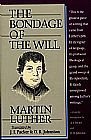
The Bondage of the Will - Luther
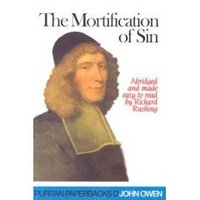
The Mortification of Sin - Owen
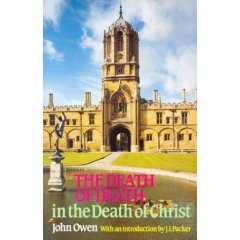
Here are the suggestions I have so far:
The Death of Death: in the Death of Jesus Christ - Owen

The Bondage of the Will - Luther
The Mortification of Sin - Owen
Thursday, June 01, 2006
Complementarianism and Egalitarianism
The issue of complementarianism and egalitarianism is an important issue that is all too often ignored due to its divisive nature. It would seem that the mere fact it is divisive shows its importance. But even more important is that at the heart of the matter is ones view of scripture and what drives that view. On reading a number of articles and books it seems evident that all too often culture drives the hermeneutic of egalitarians and thus their interpretation. One may say that this is a single issue and it should not be so front and center but an even bigger issue is that if culture drives your hermeneutic on the issue of men and women it will do so on other issues. This, in my opinion, can be seen in many of the main line denominations that some time ago took an egalitarian view and are now seriously debating the homosexual issue with regards to ordination and basically whether it is a sin or not. At the Together for the Gospel Blog Mark Dever writes a good article, Undermining Tolerance of Egalitarianism, articulating, better than I, the importance of this issue.
Wednesday, May 31, 2006
What's Ahead for the SBC Annual Meeting
Through a link at the Founders Blog I was led to an article by Don Hinkle on the upcoming SBC Annual Meeting in Greensboro that gives a good overview of the upcoming meeting and if you do not know what is going on this is a place to start to prepare you: SBC Annual Meeting Promises to be Spirited.
Thursday, May 25, 2006
Accomodation and 1 Corinthians 9:19-23
Tom Ascol gives a good overview of “accommodation” based on 1 Corinthians 9:19-23 at the Founders blog. All too often the idea of “accommodation” is either ignored or is defined by the worlds standards of “accommodating”. We need to seek after God’s standard of “accommodation” and not that of men. If we are to claim God’s word as our standard then God’s word needs to dictate how we relate to other believers and to the world. I know I need to constantly be aware of when I need to be more “accommodating” and when to stand firm and it is not easy to do if one has not come to an understanding of the whole issue before one is faced with a circumstance that may or may not necessitate “accommodation”.
Wednesday, May 24, 2006
Dr. Page Answers Questions
Dr. Frank Page has answered the questions that were given to Dr. Floyd at Total Truth.
It is good to see that some one is not afraid to answer questions in the blogging world. However while it is encouraging it also shows the issues with this whole process. This does not speak to Dr. Page but to the process. When questions are answered they invariably raise more questions so that things can be clarified. But here we are just weeks away from the convention and we truly do not have a nominee and know little about either man put forth so far except for endorsements, press releases and some short answers to some probing questions. All this to say much more would be nice but probably is not ging to happen this year.
So we nee to rely on prayer and to realize that the sovereign God of this universes is also in control of the SBC. I would hope that the issues raised by the process this year will be answered in the future so that when it comes time to seek the next president we can truly know who they are and what they stand for.
It is good to see that some one is not afraid to answer questions in the blogging world. However while it is encouraging it also shows the issues with this whole process. This does not speak to Dr. Page but to the process. When questions are answered they invariably raise more questions so that things can be clarified. But here we are just weeks away from the convention and we truly do not have a nominee and know little about either man put forth so far except for endorsements, press releases and some short answers to some probing questions. All this to say much more would be nice but probably is not ging to happen this year.
So we nee to rely on prayer and to realize that the sovereign God of this universes is also in control of the SBC. I would hope that the issues raised by the process this year will be answered in the future so that when it comes time to seek the next president we can truly know who they are and what they stand for.
Monday, May 22, 2006
The Da Vinci Code: The Movie zzzzzzzzzzzzzzz
Well, I just saw the Da Vinci Code and was not all that impressed. I agree with another reviewer that it does appear that the studio tuned down the movie. By this I mean that Langdon and Teabing in the movie discuss, with Langdon even questioning, some of Teabing’s assertions while in the book they are portrayed as basically being in agreement. The movie definitely takes a more subtle, but still blatant, approach to the idea of Mary Magdalene being the Holy Grail and she being married to Jesus. One of the ways that the movie does make its point about the many spurious contentions of the book is by showing flash backs to what is being said. This would seem to be used to convey truth to the story. But does anyone ask the question: So what if they found the bones of Mary Magdalene and the DNA matched Sophie that only proves they are related and what does than mean.
I would have to say that the book is more overt and more directed at making a statement than the movie. The movie, however, in the end comes to the same conclusions even if there is definitely a bent in the movie to offend people less.
As far as movies go it was quite slow and was not up to the par that I may expected from Ron Howard Company. At times I saw the movie as a lot slower version of Indiana Jones, a lot slower. It was not terrible, as films go, but it was also not all that compelling either.
I would not suggest a believer, or for that matter anyone, go for entertainment. Not because it was not all that good a movie, but because it does blaspheme Christ as being merely a man. This said there are many movies that should be avoided since more often than not the only Christian content of most films is that Christ’s and God’s names are used often, but not in honoring ways.
Is this the witnessing opportunity many claim it to be, NO. But that said it does create a point to start conversations, which I have had a few with people at work. When will the church stop looking for extraneous sources of opportunity when if we simply spoke and lived the truth, we need to do both, the witnessing will happen.
What I think the book has done is show the shortcoming of the church in not teaching it’s people the truth of scripture and history. When I had heard all that was in the book I just laughed because it is basically debunked by simple history. The fact that there are people, and there are, that are confused by the book says that we have not prepared our people well and we need to learn from this that we need to stop with the psychobabble that comes from so many pulpits and teach God’s word and all that surrounds it.
I would have to say that the book is more overt and more directed at making a statement than the movie. The movie, however, in the end comes to the same conclusions even if there is definitely a bent in the movie to offend people less.
As far as movies go it was quite slow and was not up to the par that I may expected from Ron Howard Company. At times I saw the movie as a lot slower version of Indiana Jones, a lot slower. It was not terrible, as films go, but it was also not all that compelling either.
I would not suggest a believer, or for that matter anyone, go for entertainment. Not because it was not all that good a movie, but because it does blaspheme Christ as being merely a man. This said there are many movies that should be avoided since more often than not the only Christian content of most films is that Christ’s and God’s names are used often, but not in honoring ways.
Is this the witnessing opportunity many claim it to be, NO. But that said it does create a point to start conversations, which I have had a few with people at work. When will the church stop looking for extraneous sources of opportunity when if we simply spoke and lived the truth, we need to do both, the witnessing will happen.
What I think the book has done is show the shortcoming of the church in not teaching it’s people the truth of scripture and history. When I had heard all that was in the book I just laughed because it is basically debunked by simple history. The fact that there are people, and there are, that are confused by the book says that we have not prepared our people well and we need to learn from this that we need to stop with the psychobabble that comes from so many pulpits and teach God’s word and all that surrounds it.
Friday, May 19, 2006
God is the End, Not the Means to an End
I was listening to the panel discussion MP3s from the Together for the Gospel and was caught by a statement that was attributed to John Piper. The statement was something like this: Men seek after God as a means to an end rather than the end itself that is God I think this epitomizes the nature of most preaching and ministries today. I am not saying that we are not supposed to help others and have ministries to do so but all too often the message people hear is something like: “come to Jesus and get this.” Is it not enough to come to Jesus and see God?
All of the issues with gimmicks and such used to keep people entertained are a necessary out come of a Gospel that sees God as a means to some end rather than being the “END.” If we feel that those that we preach and teach to need more than God’s word then in many ways we use God’s word to lead them to whatever it is we see as more important. Now I am sure that many will not proclaim this is so many words but as with most things actions speak pretty loud.
Over at the Founders there was a link to an article on Video services, Godcasting (notice the source of the article). The idea is that there can be satellite services where the Pastor does not have to even be in the country but instead his likeness is beamed to the various locations and the message is given. Now some may say the word is preached but the bigger message to me is that it is not the message that is important but the messenger. So as with any other gimmick the church is so afraid that the message is not enough that more has to be done. I firmly believe that many preach in a manner that is boring and impassionate and thus do disservice to God’s word but even if this is so it is not a reason to, in the name of being relevant, stoop to methods that put the focus on the medium rather than the message. Is not the goal of preaching God’s word to deliver it in such a way that people do not see the messenger but the Holy and Sovereign God that is the message?
Why is it that the church has to endlessly look to a lost world for direction? Maybe it is a lack of understanding of the condition of man. If the church truly understood the condition of man we would not seek after its advice. Why ask a sinner, who by the way loves sin, what it would take for them to enjoy church, the answer is “sin.” That may sound harsh but it is true since the best the unbeliever can do is sin what they would see as beneficial comes from a sinful desire.
I pray that we could all see that God is the ends we are to seek and not simply a means to some other end, no matter how spiritual that end seems to be. That we are to look to God and His word for direction and not to a world that enjoys sin.
All of the issues with gimmicks and such used to keep people entertained are a necessary out come of a Gospel that sees God as a means to some end rather than being the “END.” If we feel that those that we preach and teach to need more than God’s word then in many ways we use God’s word to lead them to whatever it is we see as more important. Now I am sure that many will not proclaim this is so many words but as with most things actions speak pretty loud.
Over at the Founders there was a link to an article on Video services, Godcasting (notice the source of the article). The idea is that there can be satellite services where the Pastor does not have to even be in the country but instead his likeness is beamed to the various locations and the message is given. Now some may say the word is preached but the bigger message to me is that it is not the message that is important but the messenger. So as with any other gimmick the church is so afraid that the message is not enough that more has to be done. I firmly believe that many preach in a manner that is boring and impassionate and thus do disservice to God’s word but even if this is so it is not a reason to, in the name of being relevant, stoop to methods that put the focus on the medium rather than the message. Is not the goal of preaching God’s word to deliver it in such a way that people do not see the messenger but the Holy and Sovereign God that is the message?
Why is it that the church has to endlessly look to a lost world for direction? Maybe it is a lack of understanding of the condition of man. If the church truly understood the condition of man we would not seek after its advice. Why ask a sinner, who by the way loves sin, what it would take for them to enjoy church, the answer is “sin.” That may sound harsh but it is true since the best the unbeliever can do is sin what they would see as beneficial comes from a sinful desire.
I pray that we could all see that God is the ends we are to seek and not simply a means to some other end, no matter how spiritual that end seems to be. That we are to look to God and His word for direction and not to a world that enjoys sin.
Saturday, May 13, 2006
McLaren on the Da Vinci Code
Thought I would take a break from the SBC Presidential Stuff:
Here is a short interview with Brian McLaren on the up coming movie the Da Vinci Code: Brian McLaren on The Da Vinci Code
When asked about the popularity of the book here was part of his response:
“I think a lot of people have read the book, not just as a popular page-turner but also as an experience in shared frustration with status-quo, male-dominated, power-oriented, cover-up-prone organized Christian religion.”
Mr. McLaren should really tell us how he feels about the church.
He then says:
“We need to ask ourselves why the vision of Jesus hinted at in Dan Brown's book is more interesting, attractive, and intriguing to these people than the standard vision of Jesus they hear about in church.”
The answer is in the Bible that I tend to think he does not take as the ACTUAL word of God or he would take it more seriously and not say the things he does.
Here are some reasons people like Dan Brown over the church: 2 Tim 4:3-4 - For the time is coming when people will not endure sound teaching, but having itching ears they will accumulate for themselves teachers to suit their own passions, and will turn away from listening to the truth and wander off into myths.
Here is another one: John 8:47 - Whoever is of God hears the words of God. The reason why you do not hear them is that you are not of God.
We really should not expect more from the world without the word of God changing their hearts and minds so they can see who the real Jesus is and not the one constructed by Dan Brown or even Brian McLaren for that matter
Here is another excerpt that says much:
“Ultimately, The Da Vinci Code is telling us important things about the image of Jesus that is being portrayed by the dominant Christian voices. [Readers] don't find that satisfactory, genuine, or authentic, so they're looking for something that seems more real and authentic. “
What exactly are those important things that Dan Brown tells us since the book is fiction? It would seem that Mr. McLaren may believe more of what Dan Brown says than the church as he has more negative comments on the church than the Da Vinci Code.
Why do people continue to read McLaren and interview him as an Evangelical?
I would like to thank Kenny Oliver at Thinkerup for the link to the interview
Here is a short interview with Brian McLaren on the up coming movie the Da Vinci Code: Brian McLaren on The Da Vinci Code
When asked about the popularity of the book here was part of his response:
“I think a lot of people have read the book, not just as a popular page-turner but also as an experience in shared frustration with status-quo, male-dominated, power-oriented, cover-up-prone organized Christian religion.”
Mr. McLaren should really tell us how he feels about the church.
He then says:
“We need to ask ourselves why the vision of Jesus hinted at in Dan Brown's book is more interesting, attractive, and intriguing to these people than the standard vision of Jesus they hear about in church.”
The answer is in the Bible that I tend to think he does not take as the ACTUAL word of God or he would take it more seriously and not say the things he does.
Here are some reasons people like Dan Brown over the church: 2 Tim 4:3-4 - For the time is coming when people will not endure sound teaching, but having itching ears they will accumulate for themselves teachers to suit their own passions, and will turn away from listening to the truth and wander off into myths.
Here is another one: John 8:47 - Whoever is of God hears the words of God. The reason why you do not hear them is that you are not of God.
We really should not expect more from the world without the word of God changing their hearts and minds so they can see who the real Jesus is and not the one constructed by Dan Brown or even Brian McLaren for that matter
Here is another excerpt that says much:
“Ultimately, The Da Vinci Code is telling us important things about the image of Jesus that is being portrayed by the dominant Christian voices. [Readers] don't find that satisfactory, genuine, or authentic, so they're looking for something that seems more real and authentic. “
What exactly are those important things that Dan Brown tells us since the book is fiction? It would seem that Mr. McLaren may believe more of what Dan Brown says than the church as he has more negative comments on the church than the Da Vinci Code.
Why do people continue to read McLaren and interview him as an Evangelical?
I would like to thank Kenny Oliver at Thinkerup for the link to the interview
Friday, May 12, 2006
Answers from a Possible Nominee for SBC President
Wade Burleson posted over at Grace and Truth to You, A New Nomination for SBC President, his answers to Tad’s questions at Total Truth. I haven’t had a chance to read them yet but will do so this weekend. Based on what I read here he may be the another nominee for SBC President so it was good to see him step up and answer some good questions. I hope any others that are nominees will do the same. At least then we can have more grounds on which to vote for someone, other than name recognition, baptisms, time as a Southern Baptist or any number of less than stellar reasons to vote for someone.
Doctrines of Grace Cheat sheet
Those of you interested in the numerous verses supporting the Doctrines of Grace can go to this site to see what they call a: Calvinism Cheat Sheet
Thanks to Strange BaptistFire for leading me to this.
I made a word document out of this so I could keep it handy but I renamed it the Doctrines of Grace Cheat Sheet, not sure I like the word “cheat” how about “help”. I am not trying to avoid the Calvinism debate but would rather not start with the issues that deal with Calvin and want to instead deal with the Bible since I do not follow Calvin but God.
Thanks to Strange BaptistFire for leading me to this.
I made a word document out of this so I could keep it handy but I renamed it the Doctrines of Grace Cheat Sheet, not sure I like the word “cheat” how about “help”. I am not trying to avoid the Calvinism debate but would rather not start with the issues that deal with Calvin and want to instead deal with the Bible since I do not follow Calvin but God.
The SBC President and CP Giving
The question has been raised concerning whether the home church of the President of the SBC should be giving a set percent of it’s undesignated receipts to the Cooperative Program (CP). My first thought is that this sure sounds legalistic if a particular number is given. But, this does not negate the fact that if one is to be the leader of an organization that finances its ministries via the CP then that president should be a supporter of it or make one of his stated goals to change things. The other issue that makes this an issue is that I have read through the blog world, I am trusting what I have read is true, that the SBC executive committee is going to recommend (this is from the Florida Baptist Witness):
…..encouraging tithing by church members, Cooperative Program support and “that we encourage the election of state and national convention officers whose churches give at least 10 percent of their undesignated receipts through the Cooperative Program.”
It would then only seem reasonable that the president support this recommendation by word and deed. I do not know if I agree with the 10% but the new president should be in agreement with proposals given by the people he leads.
I understand the many reasons for not giving to the CP. A church may not agree with how the money is being used or disagree with how it is distributed it. They may even see that funds are better used in foreign and national missions by giving directly to the particular organization (IMB, NAMB). The bottom line is we are called to be stewards of what God has given and if the CP is not the way a church feels it is being a good stewardship then it needs to be the steward they are called to. As this relates to the next president if they do not give a reasonable, whatever that means, percentage to the CP they need to answer why and what needs to be changed for them to raise their percentage of giving.
The article from the Florida Baptist Witness is not to single out Ronnie Floyd but since he is the only stated nominee it is an issue that he needs to answer, as well as anyone else running for the office of president. I pray that the various questions on the internet that have been asked will be answered before the convention but even if they are this does not leave time to interact with the answers. Maybe Dr. Floyd’s answer for such a low level of giving to CP would spur changes, if that is what he sees as being required. I do not think a president has to agree with all that is done at the leadership level as that is how change is brought about but it needs to be known what they see needing to be changed, why it is needed and how it is to be done.
Back to what started this, the next president either needs to fully support the programs of the SBC, such as the CP, through more than words or they need to as one of their goals state the changes needed to allow them to fully support the programs.
…..encouraging tithing by church members, Cooperative Program support and “that we encourage the election of state and national convention officers whose churches give at least 10 percent of their undesignated receipts through the Cooperative Program.”
It would then only seem reasonable that the president support this recommendation by word and deed. I do not know if I agree with the 10% but the new president should be in agreement with proposals given by the people he leads.
I understand the many reasons for not giving to the CP. A church may not agree with how the money is being used or disagree with how it is distributed it. They may even see that funds are better used in foreign and national missions by giving directly to the particular organization (IMB, NAMB). The bottom line is we are called to be stewards of what God has given and if the CP is not the way a church feels it is being a good stewardship then it needs to be the steward they are called to. As this relates to the next president if they do not give a reasonable, whatever that means, percentage to the CP they need to answer why and what needs to be changed for them to raise their percentage of giving.
The article from the Florida Baptist Witness is not to single out Ronnie Floyd but since he is the only stated nominee it is an issue that he needs to answer, as well as anyone else running for the office of president. I pray that the various questions on the internet that have been asked will be answered before the convention but even if they are this does not leave time to interact with the answers. Maybe Dr. Floyd’s answer for such a low level of giving to CP would spur changes, if that is what he sees as being required. I do not think a president has to agree with all that is done at the leadership level as that is how change is brought about but it needs to be known what they see needing to be changed, why it is needed and how it is to be done.
Back to what started this, the next president either needs to fully support the programs of the SBC, such as the CP, through more than words or they need to as one of their goals state the changes needed to allow them to fully support the programs.
Thursday, May 11, 2006
More info on the current nominee for SBC President, Dr. Ronnie Floyd
Check out the Total Truth blog, entry 1 and entry 2, for more info on the nomination of Ronnie Floyd for SBC President. I would say the questions asked would be fair questions for any nominee. This is not singling our Dr. Floyd but as I know of no other nominee, a major fault with the process, this is simply getting what information there is out to the public. In this day and age of the blog more information can be gathered but the flaw is that it is not all accurate or unbiased. However as there seems to be no other means to let the members of the SBC know of who they will be voting for all one can do is pray, search out the info they can find and pray some more. It would be nice if there was another candidate already out there so that at least those attending the convention could have some idea of what will be before them. Unity around one nominee is not truly unity as it does not allow for discussion and an effort to find the right man for the position.
We should all pray for the direction of the SBC at this convention as it could be a very important one, if the issues are dealt with. If however the issues are avoided, for the sake of unity or some other such justification, then business (not the word that we should like to see in the Christian realm) will be as usual.
Just added:
I thought I best add a link to further comments from Tad at Total Truth as he shows good judgment in his reaction to the questions he posed not being answered. The fact people want answers and are looking at the ministry of a nominee for the next SBC President is so that we can truly see what to expect for the vision for the SBC in the up coming years.
We should all pray for the direction of the SBC at this convention as it could be a very important one, if the issues are dealt with. If however the issues are avoided, for the sake of unity or some other such justification, then business (not the word that we should like to see in the Christian realm) will be as usual.
Just added:
I thought I best add a link to further comments from Tad at Total Truth as he shows good judgment in his reaction to the questions he posed not being answered. The fact people want answers and are looking at the ministry of a nominee for the next SBC President is so that we can truly see what to expect for the vision for the SBC in the up coming years.
Wednesday, May 10, 2006
Ronnie Floyd statement on his nomination for SBC President
Ronnie Floyd has posted a statement with regards to his nomination for President of the SBC.
Relating to the whole nomination process I have heard it said that regardless of who is nominated that a person should be nominated much earlier than about a month before the convention. How is anyone supposed to be able to look into who they would vote for. Another issue in the process seems to be how is one to know who is nominated unless they get on the internet. If the nominations were earlier then the SBC could send out profiles and allow people to pray and investigate who they should vote for. Most importantly they can pray consistently over this issue rather than show up that weekend and find out who is running and then have short obligatory prayer and then vote.
Relating to the whole nomination process I have heard it said that regardless of who is nominated that a person should be nominated much earlier than about a month before the convention. How is anyone supposed to be able to look into who they would vote for. Another issue in the process seems to be how is one to know who is nominated unless they get on the internet. If the nominations were earlier then the SBC could send out profiles and allow people to pray and investigate who they should vote for. Most importantly they can pray consistently over this issue rather than show up that weekend and find out who is running and then have short obligatory prayer and then vote.
Tuesday, May 09, 2006
What is wrong with God's Word?
With I heard the announcement of Ronnie Floyd being nominated by Jonny Hunt for the position of President of the SBC it was interesting to read the blog byTom Ascol, Of Fire Engine Baptisteries and Blasphemy , that referred to a church that had a fire engine in the baptistery and was fired when a child was baptized, what about the adults. I remember reading about this and listening to a conversation between video (it is on the page that is linked here), thanks to Tim Challies for the link..
When will this stop, my guess is not too soon as the mantra, whatever it takes to get the message across…. , seems to really mean whatever and not for the good. Do we please God by saying His word is not enough to change man’s heart? If one is to speak out they are called irrelevant and such. I am not saying to go back to flannel-graphs as mentioned in the video but for the faithful exposition of the word of God, yes even for children, that is delivered in a vibrant and understandable manner. The call to rely on God’s word is not a call to be irrelevant or to take God’s word lightly but to instead see it as the source of change and not our ingenuity.
When will this stop, my guess is not too soon as the mantra, whatever it takes to get the message across…. , seems to really mean whatever and not for the good. Do we please God by saying His word is not enough to change man’s heart? If one is to speak out they are called irrelevant and such. I am not saying to go back to flannel-graphs as mentioned in the video but for the faithful exposition of the word of God, yes even for children, that is delivered in a vibrant and understandable manner. The call to rely on God’s word is not a call to be irrelevant or to take God’s word lightly but to instead see it as the source of change and not our ingenuity.
Brian McLaren and Tony Campolo on Hell, what's next?
Well at least Brian McLaren has said something we can put a finger on, yet he still does not back his assertions up with anything but conjecture from his own reasoning and he does still seem to leave himself enough wiggle room to claim he is not a heretic. There was a couple posts over at Christianity Today: Post 1, Post2 with regards to Tony Campolo and Brian Mclaren’s views on hell and trying to form a third view. McLaren actually admits to be closer to the idea of universalism than he does to those that believe in exclusivism. But once again McLaren seems to set up a dichotomy that instead of dealing with theological truth we just need to feed the hungry, care for the poor and so on. The problem is that we are to do both and not either/or. Simply because he sees the church doing a poor job dealing with social issues does not mean that the church is wrong on theological issues or should ignore them.
Tony Campolo in Part 1 shows that simply using scripture is not enough as scripture needs to be rightly divided. He uses two passages Ephesians 4:9-10 and 1 Peter 3:19 to conclude that there is a good chance that there is a second chance to go to heaven once one dies. He seems to ignore much of other scripture for passages that in his words “can be interpreted” to back up his assertion.
It is interesting that those that have aligned themselves with the so called Emerging Church side of things so often do exactly what they claim they are against. I hear that the church has become to consumer and individual oriented, and I agree with this, but their answers seem to simply cater to a different consumer a, I guess, more compassionate consumer. So in doing this they simply create theology that includes all so all can be included in what they see God calls them to do. This in the end leads to a lot of busy and compassionate people heading towards hell, a hell that does exist regardless of the machinations these two men try.
By the way it is not only men like McLaren and Campolo that desire to deal with hell in a less than biblical manner. I remember reading a quote by John Stott, I wish I could remember where so this is just from memory so check it out yourself, on hell. In the quote he admits to his view of annihilationism as not being founded so much on scriptures teaching on hell but on his views of God. I hear he may have restated this in some manner but now simply says he is not sure (If any one has a link to where this was done it would be great to have that).
Bottom line is that the doctrine of hell is discomforting to the world and it is meant to be that way. If we water it down or deny it we are not telling the truth to people and more importantly we are denying what God’s word actually says.
Tony Campolo in Part 1 shows that simply using scripture is not enough as scripture needs to be rightly divided. He uses two passages Ephesians 4:9-10 and 1 Peter 3:19 to conclude that there is a good chance that there is a second chance to go to heaven once one dies. He seems to ignore much of other scripture for passages that in his words “can be interpreted” to back up his assertion.
It is interesting that those that have aligned themselves with the so called Emerging Church side of things so often do exactly what they claim they are against. I hear that the church has become to consumer and individual oriented, and I agree with this, but their answers seem to simply cater to a different consumer a, I guess, more compassionate consumer. So in doing this they simply create theology that includes all so all can be included in what they see God calls them to do. This in the end leads to a lot of busy and compassionate people heading towards hell, a hell that does exist regardless of the machinations these two men try.
By the way it is not only men like McLaren and Campolo that desire to deal with hell in a less than biblical manner. I remember reading a quote by John Stott, I wish I could remember where so this is just from memory so check it out yourself, on hell. In the quote he admits to his view of annihilationism as not being founded so much on scriptures teaching on hell but on his views of God. I hear he may have restated this in some manner but now simply says he is not sure (If any one has a link to where this was done it would be great to have that).
Bottom line is that the doctrine of hell is discomforting to the world and it is meant to be that way. If we water it down or deny it we are not telling the truth to people and more importantly we are denying what God’s word actually says.
Tuesday, May 02, 2006
New Website: Strange Baptist Fire
Well the new Strange Baptist Fire site is up and it will be a good place to go to see responses written with regard to the articles on the Baptist Fire site. I had not really read the articles on the Baptist Fire site until I followed a link there but when I did I simply saw the same incorrect teaching (if you can call it that) on the Doctrines of Grace that I have seen elsewhere else but their page just condenses the misinformation. It always amazes me that people can write what they write and not be held accountable for it, well until now.
Thursday, April 27, 2006
Together for the Gospel Conference
Tim Challies is bloging from the Together for the Gospel Conference in Louisville Kentuky. The conferences has some great pastors and speakers; Mark Dever , Ligon Duncan, John MacArthur, C.J. Mahaney , Dr. Al Mohler, John Piper and R.C. Sproul. I have looked at a few entries and I will for sure have my order in for MP3s, from here, when they come out.
Wednesday, April 26, 2006
Creativity in Preaching and Ministry
I was in a conversation on creativity in ministry and it brought up an area I struggle with, while we do need to make sure we are communicating God's word I am not sure the word creative is applicable to this endeavor. All too often the church tries to be cute in delivering a message that stands on its own and leads to sermon series titles like “Desperate Households” and other such plays on popular culture. Why do we feel we need to mirror the culture to deliver God’s word as it seems to me in many ways the message of Christ was counter cultural. We spend way too much time trying to be “creative” and far too little time digging into God’s word. I would much rather be a man who communicates truth and is short on creativity than be a really creative person that communicates pabulum. Now we might want to say we want to be both creative and truthful however I think that when we become too creative we may hold an audiences attention but in the end all they remember is the creativity and they totally miss God. This is not an excuse to be lazy in how we deliver truth as we need to show the passion for the truth that we have for God so if we show no passion we convey a small view of God. So as to quit rambling I think we need to seek after passion much more than creativity.
There was a good article at Banner of Truth that echoes a lot of what I feel called: Variety And Creativity In Preaching?
I realize this is not popular and I am probably in the minority. But this is not a call for the “good old days”, what ever they are, but this is a call to relying on God and scripture rather than our so called creativity and human smarts.
There was a good article at Banner of Truth that echoes a lot of what I feel called: Variety And Creativity In Preaching?
I realize this is not popular and I am probably in the minority. But this is not a call for the “good old days”, what ever they are, but this is a call to relying on God and scripture rather than our so called creativity and human smarts.
The New Discerning Reader
There is a new Discerning Reader site, not connected to the old. Tim Challies bought the name when the old Discerning Reader closed down for a variety of reasons.
Any way, check it out as there are a lot of good reviews on books to read, who would have guessed, as well as reviews of DVDs. There will even be, in the future, mini-reviews that can be used in bulletins.
Any way, check it out as there are a lot of good reviews on books to read, who would have guessed, as well as reviews of DVDs. There will even be, in the future, mini-reviews that can be used in bulletins.
Thursday, April 20, 2006
Biblical Theology
For those of you interested in Biblical Theology, and who isn’t, there are two sites I have come across that you can go to:
1) Biblical Theology – A blog/Forum to discuss issues relating to Biblical Theology
2) Biblical Theology Briefings and their related Blog Site
I would encourage you to check out these sites as the area of Biblical Theology seems to often get overlooked and in my opinion is instrumental in keeping ones focus on what all of scripture points to when delving into such areas as Systematic Theology. It is not a replacement for Systematic but is to go alongside it.
Here is an article explaining Biblical Theology:
- What is the Discipline of Biblical Theology? By Graeme Goldsworthy
1) Biblical Theology – A blog/Forum to discuss issues relating to Biblical Theology
2) Biblical Theology Briefings and their related Blog Site
I would encourage you to check out these sites as the area of Biblical Theology seems to often get overlooked and in my opinion is instrumental in keeping ones focus on what all of scripture points to when delving into such areas as Systematic Theology. It is not a replacement for Systematic but is to go alongside it.
Here is an article explaining Biblical Theology:
- What is the Discipline of Biblical Theology? By Graeme Goldsworthy
Monday, April 17, 2006
Two Good Articles
Here are two good articles that I have come across recently:
First is one in Modern Reformation called: Without Excuse by Michael Horton
This deals with people’s struggles with the what it takes to be saved and how to answer ones co-worker that is asking questions.
How do we deal with objections to the claim that Jesus is the only way?
How much does one have to know to be saved?
This second article is in Christianity Today : Nothing But The Blood by Mark Dever
This article looks at the atonement and answers many of the objections, not simply by an unbelieving world, but by the church as well. This is a subject that is under attack from those seeking to reinterpret Paul to those just plain offended by the concept and wanting to create an alternative answer to the plain reading of scripture which is all too often reinterpreted by outside writings and cultural shifts.
First is one in Modern Reformation called: Without Excuse by Michael Horton
This deals with people’s struggles with the what it takes to be saved and how to answer ones co-worker that is asking questions.
How do we deal with objections to the claim that Jesus is the only way?
How much does one have to know to be saved?
This second article is in Christianity Today : Nothing But The Blood by Mark Dever
This article looks at the atonement and answers many of the objections, not simply by an unbelieving world, but by the church as well. This is a subject that is under attack from those seeking to reinterpret Paul to those just plain offended by the concept and wanting to create an alternative answer to the plain reading of scripture which is all too often reinterpreted by outside writings and cultural shifts.
Thursday, April 13, 2006
Why the big deal about the Gospel of Judas?
Well, because the press wants it to be a big deal.
It would appear that with most things related to the press the goal of generating stories trumps truth. It is amazing that no matter the proofs we have regarding the revealed word of God if one find turns up that says something contradictory to God’s word it is often blindly accepted. However, when something shows up that may confirm some aspect of Christianity it is met with lots of skepticism, such as the find of the inscription that shows Christian churches existing earlier than many skeptics want to believe. Whether this find turns out to be dated correctly or not is not the issue it is that if a find appears to contradict the claims of Christianity it is widely publicized. But, when a find appears to support the claims for Christianity it is discredited or simply downplayed and often ignored
Below is an article from the Kairos Journal article on the Gospel of Judas.
Truly Ridiculous: National Geographic’s Forged “Gospel of Judas”
Late last week, the National Geographic Society heralded the release of a 4th century document discovered in Egypt and written in Coptic as a major insight into historical Christianity. Dubbed “The Gospel of Judas,” those marketing the manuscript have claimed that it gives new insights into “the disciple who betrayed Jesus.” The text provocatively suggests a “conversation” between Jesus and Judas in which the now infamous disciple learned a “secret mystery”: Jesus must abandon his physical body to accomplish his true spiritual mission. “You will exceed all of them,” Jesus supposedly tells Judas. “For you will sacrifice the man who clothes me.” In other words, this newly discovered “gospel” is nothing more than one of many propaganda pieces produced by Gnostics—a group of people who were desperate to undermine the doctrine of the bodily resurrection of Jesus.
Despite this background about the spurious provenance of this recent discovery, the mass media have been in frenzy about the phenomenon. After all, it’s good for business during the week leading up to Easter to take a cheap shot at historic Christianity. But the claims being made for the “Gospel of Judas” are nothing short of ridiculous. The New York Times ran an op-ed saying that historians had uncovered “proof that Judas might have been part of a divine plan.” In reality, as New Testament scholar Bruce Chilton observed in The New York Sun, “no scholar associated with the find argues this is a first century document or that it derives from Judas.” It is not in any way, shape, or form a historical writing that tells us anything reliable about either the real Jesus or Judas. Even those who say that this is the same text that the Church father Irenaeus condemned as heresy are hard pressed to prove that the Coptic version of “Judas” is the same one that the 2nd century bishop described (e.g., Irenaeus mentions a “Gospel of Judas” that has mythological material not included in the recently touted Coptic/National Geographic version).
“The Gospel of Judas” is little more than a forged pseudo-gospel probably written by some 4th century heretics. Elaine Pagels, a Princeton University religion professor and paid consultant for the National Geographic Project, is quick to point out that these people didn’t consider themselves heretics. But then again, when do heretics admit that what they believe is, in fact, heresy? Whether one is talking about the 4th century or the 21st century, there has been no shortage of desperate and unscrupulous people trying to discredit the “faith once for all delivered to the saints.”
It would appear that with most things related to the press the goal of generating stories trumps truth. It is amazing that no matter the proofs we have regarding the revealed word of God if one find turns up that says something contradictory to God’s word it is often blindly accepted. However, when something shows up that may confirm some aspect of Christianity it is met with lots of skepticism, such as the find of the inscription that shows Christian churches existing earlier than many skeptics want to believe. Whether this find turns out to be dated correctly or not is not the issue it is that if a find appears to contradict the claims of Christianity it is widely publicized. But, when a find appears to support the claims for Christianity it is discredited or simply downplayed and often ignored
Below is an article from the Kairos Journal article on the Gospel of Judas.
Truly Ridiculous: National Geographic’s Forged “Gospel of Judas”
Late last week, the National Geographic Society heralded the release of a 4th century document discovered in Egypt and written in Coptic as a major insight into historical Christianity. Dubbed “The Gospel of Judas,” those marketing the manuscript have claimed that it gives new insights into “the disciple who betrayed Jesus.” The text provocatively suggests a “conversation” between Jesus and Judas in which the now infamous disciple learned a “secret mystery”: Jesus must abandon his physical body to accomplish his true spiritual mission. “You will exceed all of them,” Jesus supposedly tells Judas. “For you will sacrifice the man who clothes me.” In other words, this newly discovered “gospel” is nothing more than one of many propaganda pieces produced by Gnostics—a group of people who were desperate to undermine the doctrine of the bodily resurrection of Jesus.
Despite this background about the spurious provenance of this recent discovery, the mass media have been in frenzy about the phenomenon. After all, it’s good for business during the week leading up to Easter to take a cheap shot at historic Christianity. But the claims being made for the “Gospel of Judas” are nothing short of ridiculous. The New York Times ran an op-ed saying that historians had uncovered “proof that Judas might have been part of a divine plan.” In reality, as New Testament scholar Bruce Chilton observed in The New York Sun, “no scholar associated with the find argues this is a first century document or that it derives from Judas.” It is not in any way, shape, or form a historical writing that tells us anything reliable about either the real Jesus or Judas. Even those who say that this is the same text that the Church father Irenaeus condemned as heresy are hard pressed to prove that the Coptic version of “Judas” is the same one that the 2nd century bishop described (e.g., Irenaeus mentions a “Gospel of Judas” that has mythological material not included in the recently touted Coptic/National Geographic version).
“The Gospel of Judas” is little more than a forged pseudo-gospel probably written by some 4th century heretics. Elaine Pagels, a Princeton University religion professor and paid consultant for the National Geographic Project, is quick to point out that these people didn’t consider themselves heretics. But then again, when do heretics admit that what they believe is, in fact, heresy? Whether one is talking about the 4th century or the 21st century, there has been no shortage of desperate and unscrupulous people trying to discredit the “faith once for all delivered to the saints.”
Monday, April 10, 2006
Monday Travels Around the Blogosphere
Tom Ascol at the Founders blog is looking at submitting a resolution at this years SBC meeting regarding a resolution on church discipline and integrity in reporting statistics.
Here are updates on Lakeshore Baptist Church in Lakeshore Mississippi.
At Together for the Gospel C.J. Mahaney writes on: The Gospel.
Here is a review of Evangelism and the Sovereignty of God which is a great book on showing how evangelism and the sovereignty of God or intimately connected.
This is probably not the usual sermon you would hear on an Easter morning in the society which we live in as it may offend someone: Spiritual Resurrection by C. H. Spurgeon. Here are some comments on the seron at Pyromaniacs.
Speaking of being offensive, at Old Truth.com there is an article entitled: The Gospel Offends Because it is Intolerant of Sin.
A pastor kissing goats? Is this telling or what? Kissing goats, where are the sheep?
Here are updates on Lakeshore Baptist Church in Lakeshore Mississippi.
At Together for the Gospel C.J. Mahaney writes on: The Gospel.
Here is a review of Evangelism and the Sovereignty of God which is a great book on showing how evangelism and the sovereignty of God or intimately connected.
This is probably not the usual sermon you would hear on an Easter morning in the society which we live in as it may offend someone: Spiritual Resurrection by C. H. Spurgeon. Here are some comments on the seron at Pyromaniacs.
Speaking of being offensive, at Old Truth.com there is an article entitled: The Gospel Offends Because it is Intolerant of Sin.
A pastor kissing goats? Is this telling or what? Kissing goats, where are the sheep?
Friday, April 07, 2006
Immigration
Tom Ascol’s post for today: Immigration fiasco is very good as it shows that the immigration issue is not as simple as “just give everyone amnesty” or “ship them all home.” As Chrsitians we are called to follow the laws of the land but we are also called to weigh those laws against the laws of God. So when the issue of immigration comes up it is not as easy to deal with when it becomes real as Tom shows.
My persoanl gut reaction is to do everything the leagal way but Tom’s examples are very good in that they show that not only do laws need to be enforced but those laws need to make sense and be sensible. We are a country of immigrants and that is a good thing since it brings the world to us. As Chrsitians we are called pilgrims or sojourners so in many ways we are in this world in a way the world does not like. Could we be seen as wrongly here by the world, it would seem so if one simply reads the paper.
At the heart of this matter is to always remember to what kingdom we owe first alligience, God’s Kingdom. We can be loyal to our country, as I am, but this loyalty must not obscure our loyalty to the cross. A good example was when I was at a “weekender” at Captial Hill Baptist and Mark Dever talked about how he took the American flag from the front of the church, and some ensuing issues that were raised by well meaning members. Not because he was un-patriotic but he saw it as possibly giving the impression that being a Christian equated to being an American. With his church being in D.C many people from other countries visit there and the last thing that needed to be done was muddy up the message of the Gospel with some form of percieved Patirotic Religion.
This all said I am still struggling over what should be done with immigrationa and how to deal with where we are right now. How does one deal with the issues Tom raises? Much more prayer needs to go into this than is often done. I for one need to do this and put my feelings on hold while I consult God and Scripture.
My persoanl gut reaction is to do everything the leagal way but Tom’s examples are very good in that they show that not only do laws need to be enforced but those laws need to make sense and be sensible. We are a country of immigrants and that is a good thing since it brings the world to us. As Chrsitians we are called pilgrims or sojourners so in many ways we are in this world in a way the world does not like. Could we be seen as wrongly here by the world, it would seem so if one simply reads the paper.
At the heart of this matter is to always remember to what kingdom we owe first alligience, God’s Kingdom. We can be loyal to our country, as I am, but this loyalty must not obscure our loyalty to the cross. A good example was when I was at a “weekender” at Captial Hill Baptist and Mark Dever talked about how he took the American flag from the front of the church, and some ensuing issues that were raised by well meaning members. Not because he was un-patriotic but he saw it as possibly giving the impression that being a Christian equated to being an American. With his church being in D.C many people from other countries visit there and the last thing that needed to be done was muddy up the message of the Gospel with some form of percieved Patirotic Religion.
This all said I am still struggling over what should be done with immigrationa and how to deal with where we are right now. How does one deal with the issues Tom raises? Much more prayer needs to go into this than is often done. I for one need to do this and put my feelings on hold while I consult God and Scripture.
Saturday, April 01, 2006
A God Centered Gospel VS. A Man Centered Gospel
This article by Steven J. Cole: How John Calvin Led me to Repent of Christian Psychology is quite good in that it shows the problems inherent in a man centered Gospel when placed against Scripture. While the article deals with his personal move from a “Christian ”psychological approach to preaching and to a God centered it is all too true of much of today’s man centered gospel message. The goal of reading scripture becomes what does God say about me and what will He do for me rather than what does Scripture say about God and what I am supposed to do to glorify Him.
I can relate to his journey as I have in the 18 years I have been a Christian heard this theological approach way too often. Who has not heard the misuse of “Love your neighbor as yourself” (Matt 22:39) to validate that we need to have self love before we can love others. Thus the individual becomes the center of his own universe and how he feels about himself dictates how he reacts to others and even God. This is as opposed to doing as God commands us and realizing we are to find joy regardless of the circumstances that surround what we do. This kind of self-love thinking is far from the “…..take up his cross daily…” (Luke 9:23) attitude we are called to have by God and instead fits more in line with Oprah and Dr. Phil.
I pray the church and the individuals that make the church would see the fallacy of self love and rely on God rather than self.
I can relate to his journey as I have in the 18 years I have been a Christian heard this theological approach way too often. Who has not heard the misuse of “Love your neighbor as yourself” (Matt 22:39) to validate that we need to have self love before we can love others. Thus the individual becomes the center of his own universe and how he feels about himself dictates how he reacts to others and even God. This is as opposed to doing as God commands us and realizing we are to find joy regardless of the circumstances that surround what we do. This kind of self-love thinking is far from the “…..take up his cross daily…” (Luke 9:23) attitude we are called to have by God and instead fits more in line with Oprah and Dr. Phil.
I pray the church and the individuals that make the church would see the fallacy of self love and rely on God rather than self.
Wednesday, March 29, 2006
Law and Grace
I was led to a good (are there any other kind) sermon by Charles Spurgeon to do with Law and Grace.
I think this quote from the sermon does a good job of explaining the law for the Christian:
" What is God's law now? It is not above a Christian-it is under a Christian. Some men hold God's law like a rod, in terrorem, over Christians, and say, "If you sin you will be punished with it." It is not so. The law is under a Christian; it is for him to walk on, to be his guide, his rule, his pattern. "We are not under the law, but under grace." Law is the road which guides us, not the rod which drives us, nor the spirit which actuates us. The law is good and excellent, if it keeps its place.”
This sermon helps me better articulate how the Law and Gospel work together. Not to mingle them but see their correct place, not by minimizing either but seeing God’s plan under the New Covenant for each.
When seen in light of the New Covenant (Jer 31:31ff) we see that the law is not abrogated (antinomianism) but is followed out of love and devotion for God not out of working for acceptance. His law is not burdensome (1 Jn 5:1-5) because we are not the ones that have to find the strength to follow it.
I was reading an article by Tom Ascol (A Neglected Topic for Needy Times )on this subject and came across this prayer from John Calvin:
I think this quote from the sermon does a good job of explaining the law for the Christian:
" What is God's law now? It is not above a Christian-it is under a Christian. Some men hold God's law like a rod, in terrorem, over Christians, and say, "If you sin you will be punished with it." It is not so. The law is under a Christian; it is for him to walk on, to be his guide, his rule, his pattern. "We are not under the law, but under grace." Law is the road which guides us, not the rod which drives us, nor the spirit which actuates us. The law is good and excellent, if it keeps its place.”
This sermon helps me better articulate how the Law and Gospel work together. Not to mingle them but see their correct place, not by minimizing either but seeing God’s plan under the New Covenant for each.
When seen in light of the New Covenant (Jer 31:31ff) we see that the law is not abrogated (antinomianism) but is followed out of love and devotion for God not out of working for acceptance. His law is not burdensome (1 Jn 5:1-5) because we are not the ones that have to find the strength to follow it.
I was reading an article by Tom Ascol (A Neglected Topic for Needy Times )on this subject and came across this prayer from John Calvin:
Grant, Almighty God,
that as thou hast made known to us thy Law,
and hast also added thy Gospel,
in which thou callest us to thy service,
and also invitest us with all kindness to partake of thy grace,--
O grant, that we may not be deaf,
either to thy command or to the promises of thy mercy,
but render ourselves in both instances submissive to thee,
and so learn to devote all our faculties to thee,
that we may in truth avow that a rule of a holy and religious life
has been delivered to us in thy law,
and that we may also firmly adhere to thy promises,
lest through any of the allurements of the world,
or through the flatteries and crafts of Satan,
thou shouldest suffer our minds to be drawn away from that love
which thou hast once manifested to us in thine only-begotten Son,
and in which thou daily confirmest us
by the teaching of the Gospel,
until we at length shall come to the full enjoymentof
this love in that celestial inheritance,
which has been purchased for us by the blood of thy only Son.
Amen.
The fact we are under grace does not remove the law but lets us relate to it in a better and grace related manner.
Sunday, March 26, 2006
Kirk Cameron and Ray Comfort Interview on ABC Nightline
I just watched a tape of Kirk Cameron and Ray Comfort (Way of the Master) that was recently done on ABC Nightline. It was a good interview and it was quite obvious that the interviewer just did not understand why Kirk does what he does. The interviewer saw much of what Kirk and Ray did as inciting rather than inviting but Kirk answered well that his job is not to avoid polarization; the Gospel does that, but to deliver the message of the Gospel truthfully.
You can read a transcript here and even see the video at this link: Kirk Cameron, From Sitcom Star to Evangelist.
You can read a transcript here and even see the video at this link: Kirk Cameron, From Sitcom Star to Evangelist.
Tuesday, March 21, 2006
Sin and Sacrifice (Hebrews 9:15-28)
I was reading Hebrews 9:15-28 and as I read about the sprinkling of blood in the OT sacrificial system and how it symbolizes the need for a perfect sacrifice, I was reminded of how this offends so many non-believers. Often this is hard for believers to defend or have an answer for as even for us it is a little grotesque.
The answer is we are not to defend it since it is meant to be grotesque. If we truly comprehended the amount of blood that would stream out of the temple and the ensuing stench during sacrifices, as the readers of Hebrews would recall, we are meant to see it, the sacrifices, as vile and uncomfortable. The reason is to remind us of our sin and the vileness of it. The death of Christ for that sin is to be remembered that way as well. All too often we see grace as the “Get Out of Jail Card” and in doing so neglect to see the darkness of our sin. The same sin Christ had to die for.
It is healthy to see our sin for what it is as this is what God uses to remind us of what we are not to be and to remind us of the changed hearts of the New Covenant that Christ ushered in at his death, burial, resurrection and ascension. We do need to glory in the grace of God but in doing so not neglect to see sin for what it is. Read Hebrews 9 and reflect on what the original sacrifices were to symbolize and how Christ fulfilling those symbols does not negate the vileness of the sin. Sin under the Old Covenant is no different than under the New as they are both to be cleansed by the death and shed blood of Christ, however, the cleansing of the Old Covenant sacrificial system was only a symbol of what was to come. That is why Hebrews lets us see that the sacrifices had to keep being offered until the perfect sacrifice, Christ Jesus, came. His sacrifice was a one time sacrifice and is not to be recreated over and over again or we miss the point of the perfect sacrifice.
So, when someone is offended by the whole issue of sacrifice for sin and the whole issue of blood help them see that this should remind us of what sin really is. I do not say they will buy the answer but if God is working on their heart they will come to see what their sin really is and repent.
The answer is we are not to defend it since it is meant to be grotesque. If we truly comprehended the amount of blood that would stream out of the temple and the ensuing stench during sacrifices, as the readers of Hebrews would recall, we are meant to see it, the sacrifices, as vile and uncomfortable. The reason is to remind us of our sin and the vileness of it. The death of Christ for that sin is to be remembered that way as well. All too often we see grace as the “Get Out of Jail Card” and in doing so neglect to see the darkness of our sin. The same sin Christ had to die for.
It is healthy to see our sin for what it is as this is what God uses to remind us of what we are not to be and to remind us of the changed hearts of the New Covenant that Christ ushered in at his death, burial, resurrection and ascension. We do need to glory in the grace of God but in doing so not neglect to see sin for what it is. Read Hebrews 9 and reflect on what the original sacrifices were to symbolize and how Christ fulfilling those symbols does not negate the vileness of the sin. Sin under the Old Covenant is no different than under the New as they are both to be cleansed by the death and shed blood of Christ, however, the cleansing of the Old Covenant sacrificial system was only a symbol of what was to come. That is why Hebrews lets us see that the sacrifices had to keep being offered until the perfect sacrifice, Christ Jesus, came. His sacrifice was a one time sacrifice and is not to be recreated over and over again or we miss the point of the perfect sacrifice.
So, when someone is offended by the whole issue of sacrifice for sin and the whole issue of blood help them see that this should remind us of what sin really is. I do not say they will buy the answer but if God is working on their heart they will come to see what their sin really is and repent.
Tuesday, March 14, 2006
Around the Blogosphere
News from around the Blogosphere:
Soulforce is to make a bus tour, I mean Equality Ride, of those colleges and universities that disagree with their views and have what they feel is anti-gay bias.. It would seem that we should be praying for those campuses that are going to as they stand for truth and that they will be firm yet loving in their conversations. Overall this tour is to gain publicity and to try and make out that those schools that stand for what scripture says are intolerant and harmful to society. The goal of the universities should be to do what is necessary to allow as little press as possible and still stand their ground and in the process show the visiting students that scripture denies what they are trying to promote.
Here is a report how things faired at Liberty University.
More and more the church tries to emulate the world in how it draws its consumers, and there is there is the rub, “consumers.” On Slice of Laodicea there is an article that deals with a church that has what would be considered a suggestive billboard that is supposed to draw people to a website and then to church. But in all of this is missed the Gospel and instead the focus in marketing. Is the Bible to be a source of info on our sex lives or to reveal the redemptive plan of God through His son Jesus Christ? There may be info in the scriptures that will help our relationships but all of this is secondary to the life changing effect of the Gospel. At the heart of this is, in my opinion, who one relies on to build the church: us or GOD.
Tom Ascol gives a heads up on what is to be taught at Centrifuge this year and shows that we need to be wary of the content that comes from the SBC as well as other places. I know after reading some different books about children and youth in the 1600’s ( A Token for Children ) and 1700’s ( To the Rising Generation ) it becomes apparent that we are much worse than shallow today we are not even in the water.
Soulforce is to make a bus tour, I mean Equality Ride, of those colleges and universities that disagree with their views and have what they feel is anti-gay bias.. It would seem that we should be praying for those campuses that are going to as they stand for truth and that they will be firm yet loving in their conversations. Overall this tour is to gain publicity and to try and make out that those schools that stand for what scripture says are intolerant and harmful to society. The goal of the universities should be to do what is necessary to allow as little press as possible and still stand their ground and in the process show the visiting students that scripture denies what they are trying to promote.
Here is a report how things faired at Liberty University.
More and more the church tries to emulate the world in how it draws its consumers, and there is there is the rub, “consumers.” On Slice of Laodicea there is an article that deals with a church that has what would be considered a suggestive billboard that is supposed to draw people to a website and then to church. But in all of this is missed the Gospel and instead the focus in marketing. Is the Bible to be a source of info on our sex lives or to reveal the redemptive plan of God through His son Jesus Christ? There may be info in the scriptures that will help our relationships but all of this is secondary to the life changing effect of the Gospel. At the heart of this is, in my opinion, who one relies on to build the church: us or GOD.
Tom Ascol gives a heads up on what is to be taught at Centrifuge this year and shows that we need to be wary of the content that comes from the SBC as well as other places. I know after reading some different books about children and youth in the 1600’s ( A Token for Children ) and 1700’s ( To the Rising Generation ) it becomes apparent that we are much worse than shallow today we are not even in the water.
Monday, March 06, 2006
Women, Ministry and the Church
Having gone to the Shepherd’s conference Saturday and listened to Ligon Duncan speak on the issue of women in ministry and the importance of dealing with the subject, it reminded me of how the church today wants to do things the easy way. If you take a stand that women have roles to fill, just as men do, you will often be labeled as subjugating women. The issue is all too often laden with emotion and the simple fact that one might say that some ministry is not permissible is not acceptable in today’s culture. The church has bought into the world’s idea that if it is something you desire you should be able to “do it.”
What is amazing is that when it is said that there are limits to women’s ministry people forget that the same is to be said for men. Not all men can be elders no matter how good they teach or how successful they are in business. However, the church has missed the boat in that arena as well. At the heart of this all is that the heart of mankind desires to do whatever it pleases and if they are told no that just does not sit well. The whole issue of entitlement permeates the church and everyone feels they are entitled to do as they please.
We miss the point of observing the Trinity in that the 3 are one in essence, all God, but all have a role to fulfill. We do not see Jesus telling the Father, “no I would rather have your position because that is what I feel called to and who are you to say no since I am God.” Each member did as they were called to in the relationship: The Father sent the Son and the Son sent the Holy Spirit. So it is with us, we all have a part in the church and God has designed those parts not us. Once we start messing with the church to make it in our own image what a mess it becomes.
As a side note, this is not just an issue of women in ministry it is also about interpreting scripture. I think it is not a coincidence that those denominations that now ordain women now either condone homosexuality or are having to deal with the issue on a very serious basis. Once you start making everything in scripture culturally relevant there is really no end to what will happen as culture continually changes.
I do not say any of this is easy but if we truly see God’s word as it is, I can say it is not a burden. Nike’s saying does have merit in that when it comes to scripture we do need to “Just Do It.” Not without study and prayer but when the plain truth of scripture stares us in the face we need to comply and thankfully we are given that ability as believers due to the hearts we have being changed by God to allow us to comply and desire to do so.
What is amazing is that when it is said that there are limits to women’s ministry people forget that the same is to be said for men. Not all men can be elders no matter how good they teach or how successful they are in business. However, the church has missed the boat in that arena as well. At the heart of this all is that the heart of mankind desires to do whatever it pleases and if they are told no that just does not sit well. The whole issue of entitlement permeates the church and everyone feels they are entitled to do as they please.
We miss the point of observing the Trinity in that the 3 are one in essence, all God, but all have a role to fulfill. We do not see Jesus telling the Father, “no I would rather have your position because that is what I feel called to and who are you to say no since I am God.” Each member did as they were called to in the relationship: The Father sent the Son and the Son sent the Holy Spirit. So it is with us, we all have a part in the church and God has designed those parts not us. Once we start messing with the church to make it in our own image what a mess it becomes.
As a side note, this is not just an issue of women in ministry it is also about interpreting scripture. I think it is not a coincidence that those denominations that now ordain women now either condone homosexuality or are having to deal with the issue on a very serious basis. Once you start making everything in scripture culturally relevant there is really no end to what will happen as culture continually changes.
I do not say any of this is easy but if we truly see God’s word as it is, I can say it is not a burden. Nike’s saying does have merit in that when it comes to scripture we do need to “Just Do It.” Not without study and prayer but when the plain truth of scripture stares us in the face we need to comply and thankfully we are given that ability as believers due to the hearts we have being changed by God to allow us to comply and desire to do so.
Wednesday, March 01, 2006
Family Friendly II
More thoughts on what is actually being "Family Friendly:
As I further think about how the church is to rightly deal with families it does seem that the essential question to ask first is: What is the purpose of the church? If the purpose is to provide a slew of activities and allow parents a time of “spiritual renewal” then sending the children off in every direction would be a logical result. Now, I referenced “spiritual renewal” but I do not think that this has to be done apart from the family. We, the church, have in our day of the “individual” redefined things in such a way that if anything appears to get in the way of ones personal aim then it needs to be either eliminated or at least abated for some time frame. Thus having children in a service or at some specific age in a general Sunday morning study is seen as distracting and thus to be eliminated. Of course things are not worded this way and the common claim is that since differing ages learn differently then they need to be divided. While there is some truth to this it does not necessarily have to end in separation.
This is not an issue that only applies to children. I hear adults complain that group studies just slow down their spiritual walk. This individualistic approach neglects to see that the community grows together as well as individually. So while a group may slow one individual down that individual may actually increase the growth of the slower members of the community. Thus the church as whole grows much faster and more deeply and the individual grows in that they actually use the gifts they have for the benefit of others ( 1 Cor 12 ). This applies to children as well as adults so that if these differing groups learn together the growth will be so much more as a whole.
I do believe that there are times for groups to be built around specific needs, common life experiences and mutual goals not at the expense of the church as a whole. By constantly separating the church we in essence create many smaller churches that lack the discernment that others may provide but due to this separating is not possible.
I am sure that for many this sounds like an old fashioned, one school room, way of seeing church but let me assure you I do not think this is so. My goal in trying to see how this is too truly work is to see how God has designed the family and thus the church family and then make sure that we are doing all we can to help it grow. I do not think that on the sermon on the mount there was a separate children’s mini sermon on the mount or youth sermon on the mount with culturally correct lingo but those that were there sat and listened together. The parents were then tasked with explaining what was heard and this is how I think the main teaching in church should function. This way the teaching of children and youth is not abrogated and given to some other person but the parents are intimately involved in the discipleship of their children.
What is actually just as hard a problem is not in seeing how the church should function with regards to families but seeing how the church is to move to what is truly a “Family Friendly” church. This separation has gone on so long and become so ingrained moving people from this is a difficult task. This is true also for the teaching of younger people in the church. We so often dumb down the message to children that over time this is what is expected and all that can be handled but children can learn so much more.
I will have to think through this more as the more I ponder what God desires from His church all too often I see the church taking it’s cues from the world rather than scripture. Yes we have to deal with a fallen world but we as a church do not need to take on fallen principles but instead need to work at moving God’s people to God’s design.
As I further think about how the church is to rightly deal with families it does seem that the essential question to ask first is: What is the purpose of the church? If the purpose is to provide a slew of activities and allow parents a time of “spiritual renewal” then sending the children off in every direction would be a logical result. Now, I referenced “spiritual renewal” but I do not think that this has to be done apart from the family. We, the church, have in our day of the “individual” redefined things in such a way that if anything appears to get in the way of ones personal aim then it needs to be either eliminated or at least abated for some time frame. Thus having children in a service or at some specific age in a general Sunday morning study is seen as distracting and thus to be eliminated. Of course things are not worded this way and the common claim is that since differing ages learn differently then they need to be divided. While there is some truth to this it does not necessarily have to end in separation.
This is not an issue that only applies to children. I hear adults complain that group studies just slow down their spiritual walk. This individualistic approach neglects to see that the community grows together as well as individually. So while a group may slow one individual down that individual may actually increase the growth of the slower members of the community. Thus the church as whole grows much faster and more deeply and the individual grows in that they actually use the gifts they have for the benefit of others ( 1 Cor 12 ). This applies to children as well as adults so that if these differing groups learn together the growth will be so much more as a whole.
I do believe that there are times for groups to be built around specific needs, common life experiences and mutual goals not at the expense of the church as a whole. By constantly separating the church we in essence create many smaller churches that lack the discernment that others may provide but due to this separating is not possible.
I am sure that for many this sounds like an old fashioned, one school room, way of seeing church but let me assure you I do not think this is so. My goal in trying to see how this is too truly work is to see how God has designed the family and thus the church family and then make sure that we are doing all we can to help it grow. I do not think that on the sermon on the mount there was a separate children’s mini sermon on the mount or youth sermon on the mount with culturally correct lingo but those that were there sat and listened together. The parents were then tasked with explaining what was heard and this is how I think the main teaching in church should function. This way the teaching of children and youth is not abrogated and given to some other person but the parents are intimately involved in the discipleship of their children.
What is actually just as hard a problem is not in seeing how the church should function with regards to families but seeing how the church is to move to what is truly a “Family Friendly” church. This separation has gone on so long and become so ingrained moving people from this is a difficult task. This is true also for the teaching of younger people in the church. We so often dumb down the message to children that over time this is what is expected and all that can be handled but children can learn so much more.
I will have to think through this more as the more I ponder what God desires from His church all too often I see the church taking it’s cues from the world rather than scripture. Yes we have to deal with a fallen world but we as a church do not need to take on fallen principles but instead need to work at moving God’s people to God’s design.


 Posts
Posts